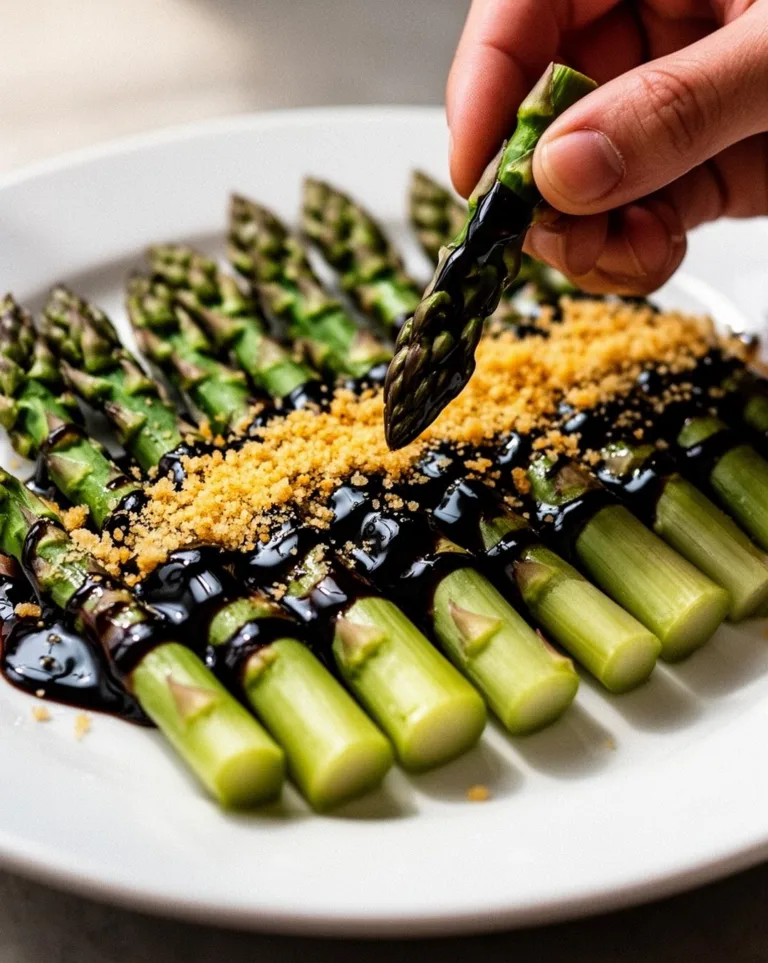
Balsamic Glazed Asparagus – Sweet & Savory Delight
The bright green stalks of spring shine when brushed with a silky balsamic glaze.
A quick roast brings out natural sweetness while the glaze adds depth.
This side dish balances tangy notes with crisp texture, perfect for any meal.
Enjoy a burst of Mediterranean flavor with just a handful of simple ingredients.
Why It’s Good for You
Balsamic glazed asparagus delivers fiber and Vitamin K, supporting heart health and bone strength.
The antioxidants in balsamic vinegar help lower blood sugar spikes after meals.
Low‑calorie and high in protein, the dish fits well into weight‑management plans.
Those with sensitive stomachs should limit the vinegar amount, as its acidity can cause discomfort.
Ingredients
1 lb (450 g) fresh asparagus, trimmed; 2 Tbsp (30 ml) extra‑virgin olive oil; ¼ cup (60 ml) balsamic vinegar; 1 Tbsp (15 g) brown sugar; 1 clove garlic, minced; ½ tsp (2 g) lemon zest; pinch of sea salt; pinch of cracked black pepper.
Equipment
Large rimmed baking sheet; parchment paper or silicone mat; medium saucepan; whisk; tongs; kitchen timer; serving platter.
Step‑by‑Step Instructions
Preheat the oven to 425 °F (220 °C) and line the sheet with parchment for easy cleanup.
In a bowl, toss the asparagus with olive oil, sea salt, and cracked pepper until evenly coated.
Spread the spears in a single layer, ensuring they don’t overlap, then roast for 10 minutes.
While the asparagus cooks, combine balsamic vinegar, brown sugar, minced garlic, and lemon zest in a saucepan; whisk over medium heat.
Continue whisking until the mixture thickens to a glossy reduction, about 5 minutes, then remove from heat.
After the initial 10‑minute roast, flip the asparagus with tongs and brush each stalk with half the glaze.
Return the sheet to the oven and roast another 5‑7 minutes, until the spears are tender‑crisp and lightly caramelized.
Remove from the oven, transfer to a serving platter, and drizzle the remaining glaze for a final shine.
Let the dish rest for two minutes so the flavors meld, then serve warm or at room temperature.
For an extra pop of freshness, sprinkle a few additional lemon zest shards over the top.
Pair the balsamic glazed asparagus with grilled chicken, fish, or a hearty grain bowl for a balanced meal.
Enjoy the satisfying crunch and the sweet‑tangy glaze that makes this vegetable side unforgettable.
Storage Tips
Cool the leftovers to room temperature, then store in an airtight container in the refrigerator.
The glazed asparagus keeps well for up to three days, retaining texture if reheated gently.
To freeze, place the cooled spears on a tray, freeze solid, then transfer to a zip‑top bag; use within one month.
When reheating, a quick pass under a hot broiler restores the caramelized exterior without sogginess.
Variations and Substitutions
Swap brown sugar for honey or maple syrup to add a floral note to the glaze.
Use apple cider vinegar instead of balsamic for a sharper acidity that still balances the sweet.
Add toasted pine nuts or slivered almonds for crunch, or sprinkle grated Parmesan for a savory twist.
For a vegan version, omit the cheese and rely on the natural nutty flavor of toasted seeds.
Tips and Tricks
Choose asparagus with firm, bright stalks and closed tips; they roast evenly and stay crisp.
If the spears are thick, trim them to a uniform size for consistent cooking.
Pat the asparagus dry before oiling to ensure the glaze adheres without steam slipping.
Monitor the glaze closely; over‑reduction can turn it bitter, while under‑reduction leaves it watery.
Use a silicone brush for an even coating, and reserve a small amount of glaze for after‑cook drizzle.
For extra depth, add a pinch of dried thyme or rosemary to the reduction while it simmers.
Serve the dish on a warm platter to keep the glaze glossy and the spears succulent.
Additional Notes
The combination of olive oil and balsamic vinegar creates a classic Mediterranean flavor profile beloved worldwide.
Garlic and lemon zest introduce bright aromatics that lift the earthy asparagus.
This recipe scales easily; double the ingredients and use two baking sheets for larger gatherings.
A quick sprinkle of flaky sea salt just before serving can enhance the sweet‑tangy balance.
Serving Suggestions
Pair the balsamic glazed asparagus with a quinoa‑and‑chickpea salad for a protein‑rich vegetarian plate.
Use it as a topping for pizza, adding a gourmet touch to classic cheese and tomato.
Conclusion
Balsamic glazed asparagus offers a harmonious blend of sweet, tangy, and earthy flavors that elevate any meal.
With minimal prep and a quick roast, this low‑calorie side delivers essential nutrients like fiber and Vitamin K.
Adjust the glaze to suit your taste, and experiment with herbs, nuts, or cheeses for variety.
Whether served beside grilled proteins or incorporated into a hearty grain bowl, it adds color, texture, and a delightful Mediterranean twist to your dining table.
Frequently Asked Questions
Can I make balsamic glazed asparagus without a oven?
Yes, sauté the spears in a skillet over medium‑high heat, then finish with the glaze for a similar caramelized result.
What’s the best way to keep the glaze from burning?
Watch the reduction closely, stir constantly, and remove from heat as soon as it reaches a syrupy consistency.
Is balsamic glaze high in sugar?
The glaze contains a small amount of brown sugar; you can reduce or replace it with a natural sweetener to lower overall sugar content.
Can I use frozen asparagus for this recipe?
Fresh asparagus yields the best texture, but if using frozen, thaw completely, pat dry, and adjust cooking time to avoid sogginess.
How long does the refrigerated glaze stay good?
Store the glaze in a sealed jar in the fridge for up to two weeks; stir before reusing.
Is this dish suitable for a low‑sodium diet?
Limit added salt and use a low‑sodium balsamic vinegar to keep the sodium level minimal while preserving flavor.