Introduction
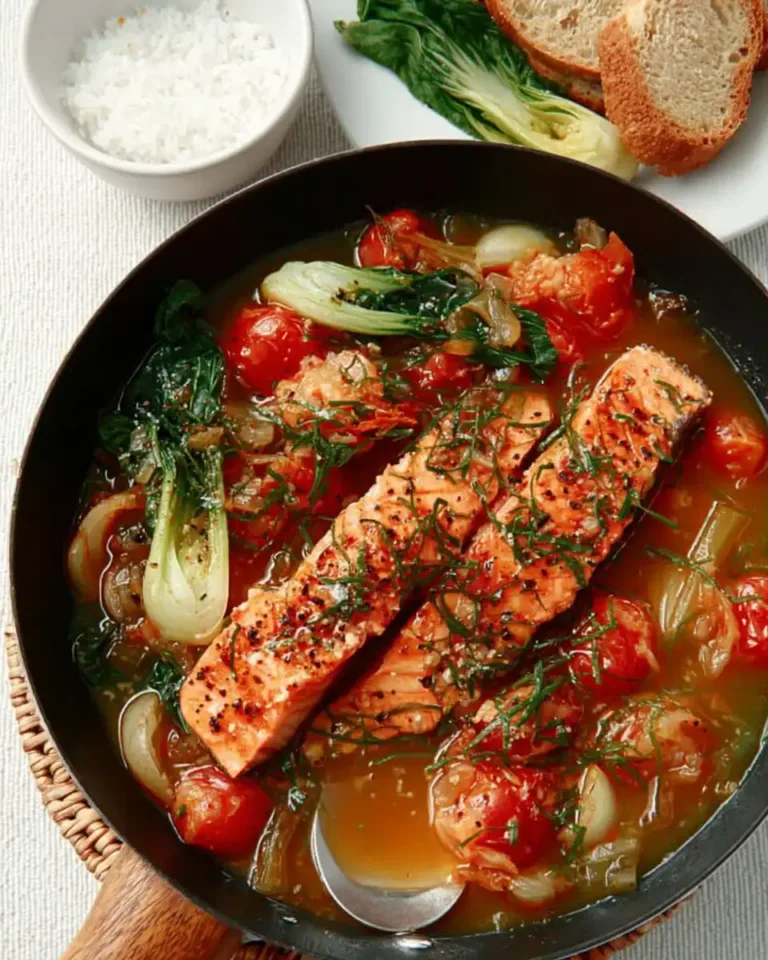
Sinigang na Salmon Belly is a deeply comforting Filipino soup known for its bright sour broth, tender vegetables, and rich pieces of salmon belly. This version of Sinigang na Salmon Belly is adapted for a modern American kitchen while keeping its traditional balance of savory, sour, and fresh flavors. The combination of flaky salmon belly, taro, bok choy, and a tamarind based broth makes this dish satisfying without feeling heavy. Whether you are new to Filipino cooking or already familiar with sour soups, Sinigang na Salmon Belly is an easy and rewarding recipe that fits well into weeknight meals or relaxed family dinners.
Equipment Needed
A large heavy bottom pot or Dutch oven
Sharp chef’s knife
Cutting board
Measuring cups and spoons
Wooden spoon or silicone spatula
Ladle for serving
Ingredients List
½ medium onion, finely diced for a mellow aromatic base
2 ripe tomatoes, diced to add sweetness and body to the broth
1 cup taro root, peeled and cut into 2 inch chunks for natural thickness
¾ cup string beans, trimmed and cut into 2 inch pieces
4 cups chicken broth or water, broth adds deeper flavor
1 pound salmon belly, patted dry and cut into large portions
1 sinigang seasoning packet, adjust to taste for sourness
1½ tablespoons fish sauce such as Red Boat Fish Sauce, Thai Kitchen Fish Sauce, or Three Crabs Fish Sauce
4 large bundles bok choy, leaves separated and washed
1 tablespoon neutral oil like avocado or vegetable oil
Part One, Understanding Sinigang na Salmon Belly Basics
What Makes Salmon Belly Ideal
Salmon belly is prized for its higher fat content, which keeps the fish tender even after simmering. In Sinigang na Salmon Belly, this richness balances the sharp sour broth beautifully. Unlike lean fillets, salmon belly stays moist and flavorful, making it perfect for soup based cooking.
Flavor Profile Overview
Sinigang na Salmon Belly delivers layers of taste. You get sourness from the seasoning, umami from fish sauce, sweetness from tomatoes, and earthy notes from taro. The vegetables absorb the broth, making every spoonful comforting and complex without being overwhelming.
Part Two, Step by Step Cooking Method
Preparing and Searing the Salmon
Heat a large pot over medium high heat. Once hot, add one tablespoon of oil and allow it to shimmer. Carefully place the salmon belly pieces into the pot, skin side down if applicable. Sear for about one minute per side until lightly golden. The goal is color, not full cooking. Remove the salmon and set aside on a plate. This step adds depth and prevents the fish from falling apart later.
Building the Aromatic Broth
In the same pot, add the diced onion and tomatoes. Stir gently and cook for about one minute until the onions soften and the tomatoes release their juices. Pour in the chicken broth or water, scraping the bottom of the pot to lift any flavorful bits. Cover and bring to a gentle boil.
Cooking the Vegetables
Once boiling, add the taro and string beans. Cover again and cook for about five minutes. The taro should begin to soften and slightly thicken the broth while the beans remain vibrant and tender, not mushy.
Adding the Salmon and Seasoning
Lower the heat slightly and gently return the salmon belly to the pot. Cover and cook for another five minutes until the salmon is fully cooked but still tender. Stir very carefully to avoid breaking the fish. Add the sinigang seasoning gradually, tasting as you go to reach your preferred sourness. Stir in the fish sauce to balance saltiness and umami.
Finishing With Bok Choy
Add the bok choy leaves to the pot and gently push them into the broth. Cook for two to three minutes until just wilted. Turn off the heat immediately to preserve their color and texture. Ladle the Sinigang na Salmon Belly into bowls and serve hot with steamed rice.
Part Three, Tips and Tricks for Best Results
Controlling Sourness
Sinigang seasoning packets vary in intensity. Always add in stages and taste after each addition. This prevents the broth from becoming overly sharp. If you prefer a milder soup, use only part of the packet and rely on the natural tomato acidity.
Keeping Salmon Intact
Handle the salmon as little as possible once it goes back into the pot. Use a spoon to gently move vegetables instead of stirring aggressively. This keeps the salmon belly pieces whole and visually appealing.
Enhancing the Broth
For deeper flavor, use chicken broth instead of water and choose ripe tomatoes. You can also simmer the onions and tomatoes a bit longer before adding liquid to intensify sweetness.
Vegetable Texture Control
Add vegetables in stages based on how quickly they cook. Taro needs more time, while bok choy should always go in last. This ensures every ingredient has the right bite.
Part Four, Notes, Storage, and Practical Details
Recipe Notes
Sinigang na Salmon Belly tastes best when freshly cooked, but it also develops deeper flavor after resting. The broth will naturally thicken slightly as it cools due to the taro. If it becomes too thick, simply add a splash of water when reheating.
Storage Guidelines
Allow leftovers to cool completely before transferring to an airtight container. Store in the refrigerator for up to two days. Reheat gently over low heat to avoid overcooking the salmon. Avoid boiling during reheating, as this can cause the fish to break apart.
Make Ahead Advice
You can prep vegetables and portion the salmon belly a day in advance. Store them separately in the refrigerator. Cook the soup fresh for best texture and flavor.
Benefits of Sinigang na Salmon Belly
Sinigang na Salmon Belly offers several nutritional benefits. Salmon belly is rich in omega three fatty acids, which support heart health and brain function. The soup is high in protein and contains vitamins A and C from bok choy and tomatoes. Taro provides dietary fiber and essential minerals like potassium.
This dish is well suited for people seeking comforting meals without heavy sauces. It is naturally gluten free and can fit into balanced eating plans. Those sensitive to sodium should adjust the fish sauce and seasoning amounts. Individuals with seafood allergies should avoid this dish.
Variations to Try
You can customize Sinigang na Salmon Belly by swapping bok choy with spinach or napa cabbage. Add radish slices for extra crunch and mild sweetness. For a spicier version, include fresh chili peppers during the broth stage. You can also mix in shrimp along with the salmon for a seafood combination that adds variety and depth.
Serving Suggestions
Serve Sinigang na Salmon Belly hot with plain steamed white rice to soak up the broth. A small side of sliced fresh tomatoes with salt pairs well and keeps the meal simple and balanced.
Conclusion
Sinigang na Salmon Belly is a comforting sour soup that showcases how simple ingredients can create bold flavor. With tender salmon belly, vibrant vegetables, and a balanced broth, this dish is both nourishing and satisfying. By following these steps and tips, you can confidently prepare Sinigang na Salmon Belly at home and enjoy a warm, flavorful meal that feels both traditional and approachable.
Frequently Asked Questions
Can I use regular salmon fillet instead of salmon belly?
Yes, but salmon belly provides richer texture and flavor. Fillets work if handled gently.
How sour should Sinigang na Salmon Belly be?
Sourness is personal preference. Add seasoning gradually and taste often.
Can I freeze Sinigang na Salmon Belly?
Freezing is not recommended as the salmon texture can become mushy after thawing.
What can I use instead of taro?
You can use potatoes or daikon radish, though the broth will be less creamy.
Is Sinigang na Salmon Belly spicy?
Traditionally it is not spicy, but you can add chili peppers if desired.
Sinigang na Salmon Belly
- Total Time: thirty five minutes
- Yield: four servings
Description
Sinigang na Salmon Belly is a comforting sour soup made with rich salmon belly, fresh vegetables, and a tangy broth. This dish delivers a perfect balance of savory, bright, and hearty flavors that make it ideal for a satisfying home cooked meal. The tender salmon, earthy taro, and crisp greens come together in a warming bowl that feels both nourishing and indulgent.
Ingredients
Salmon belly, cut into large portions and patted dry
Neutral cooking oil such as avocado oil or vegetable oil
Medium onion, finely diced
Ripe tomatoes, diced
Chicken broth or water
Taro root, peeled and cut into large chunks
String beans, trimmed and cut into even lengths
Sinigang seasoning packet, adjusted to taste
Fish sauce such as Red Boat Fish Sauce, Thai Kitchen Fish Sauce, or Three Crabs Fish Sauce
Fresh bok choy, leaves separated and washed
Instructions
1.
2. Heat a large pot over medium high heat and add oil once the pot is hot
3. Sear the salmon belly briefly until lightly golden on both sides then remove and set aside
4. Add onion and tomatoes to the same pot and cook until softened and fragrant
5. Pour in the broth or water and bring the mixture to a gentle boil
6. Add taro and string beans then cover and cook until just tender
7. Return the salmon belly to the pot and cook gently until the fish is fully cooked
8. Stir in sinigang seasoning gradually until the desired sourness is reached
9. Add fish sauce to balance the flavor and enhance savoriness
10. Add bok choy leaves and cook until just wilted
11. Turn off the heat and serve hot with steamed rice
12.
Notes
Sear the salmon only briefly to prevent it from breaking apart later
Add the sinigang seasoning in stages since sourness can vary by brand
Handle the soup gently after adding the fish to keep the salmon belly intact
The broth may thicken slightly as it cools due to the taro
Reheat leftovers slowly over low heat to maintain texture
- Prep Time: fifteen minutes
- Cook Time: twenty minutes
- Category: soup
- Method: simmering
- Cuisine: Filipino