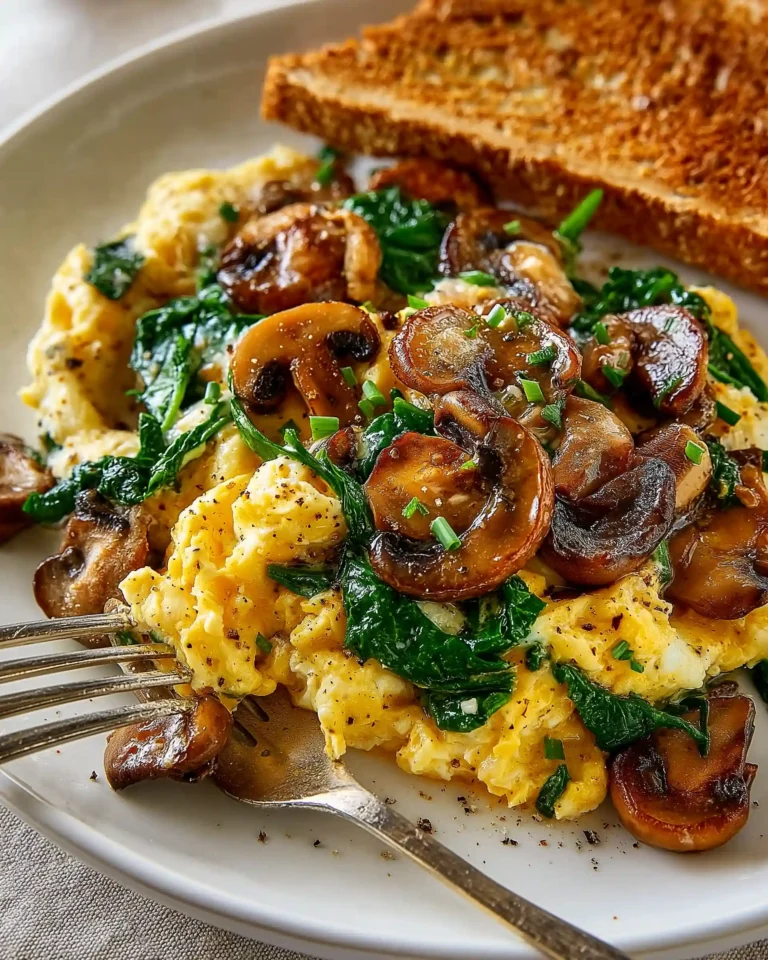
If you’re looking for a wholesome, protein-packed breakfast that’s quick to prepare and satisfying, look no further than the Mushroom-Spinach Scrambled Eggs Recipe. This delightful dish brings together the earthy flavors of mushrooms, the freshness of spinach, and the creamy richness of scrambled eggs. Whether you’re aiming for a high-protein start to your day or a light brunch that doesn’t compromise on taste, this recipe is the perfect match.
Not only is it simple to whip up in under 15 minutes, but it also allows flexibility with ingredients, making it adaptable for vegetarian, dairy-free, or high-protein meal plans. In this article, we’ll explore the nutritional benefits, detailed preparation tips, ingredient breakdowns, cooking techniques, variations, and storage methods for this recipe. You’ll also get answers to the most commonly asked questions about it before we wrap up with a solid conclusion.
The Nutritional Powerhouse of Mushroom-Spinach Scrambled Eggs
Health Benefits of Key Ingredients
Mushrooms are rich in antioxidants, B vitamins, and potassium. They support immune health and may help regulate blood pressure. Spinach, on the other hand, is a leafy green powerhouse packed with iron, folate, magnesium, and fiber. It’s excellent for digestion and energy.
Eggs provide complete proteins, essential fatty acids, and choline, which supports brain function. Using a combination of whole eggs and egg whites keeps the dish rich in protein while managing cholesterol intake.
Olive oil is a heart-healthy fat that adds flavor and aids the absorption of fat-soluble vitamins like A, D, E, and K. Finally, the optional cheese offers calcium and a creamy texture for those who tolerate dairy.
Ideal for Various Diets
This recipe is naturally gluten-free, and with slight modifications, it can be made dairy-free or vegetarian. For those following keto, paleo, or low-carb diets, the ingredients align well with dietary goals, thanks to the low-carb and high-protein composition.
Print
Mushroom-Spinach Scrambled Eggs Recipe
- Total Time: 15 minutes
- Yield: 1 scramble
Description
A quick, protein-packed mushroom-spinach scrambled eggs recipe that’s perfect for a nutritious breakfast, brunch, or light dinner. Ready in just 15 minutes!
Ingredients
1/2 tbsp olive oil
1/4 cup onions, chopped
1 1/2 cups mushrooms, thinly sliced
1/2 cup fresh baby spinach
2 large eggs
1 large egg white
1 teaspoon water
Kosher salt, to taste
Black pepper, to taste
2 tbsp cheese (optional: gruyere, cheddar, or dairy-free cheese)
Instructions
1. In a small bowl, whisk the eggs, egg white, water, salt, and pepper until well blended.
2. Heat olive oil in a nonstick skillet over medium heat.
3. Add onions and sauté for 3–4 minutes until golden and tender.
4. Add mushrooms and cook for another 3–4 minutes until soft.
5. Stir in spinach and cook until wilted.
6. Pour in the egg mixture and stir gently until the eggs are cooked through and no liquid remains.
7. If using cheese, add it midway through cooking the eggs so it melts in.
8. Remove from heat and serve warm.
Notes
You can skip the cheese for a dairy-free option.
Add red pepper flakes or smoked paprika for a flavor kick.
Refrigerate leftovers in an airtight container for up to 3 days.
- Prep Time: 5 minutes
- Cook Time: 10 minutes
- Category: Breakfast
- Method: Stovetop
- Cuisine: American
Step-by-Step Cooking Instructions for Perfect Scrambled Eggs
Ingredient List and Preparation
Before you begin, gather all your ingredients to make the process smooth and efficient. Here’s what you’ll need:
- 1/2 tablespoon olive oil
- 1/4 cup finely chopped onions
- 1 1/2 cups thinly sliced mushrooms
- 1/2 cup fresh baby spinach
- 2 large eggs
- 1 large egg white
- 1 teaspoon water
- Kosher salt and black pepper to taste
- 2 tablespoons shredded cheese (optional — gruyere, cheddar, or dairy-free alternatives)
Start by washing and slicing the mushrooms, finely chopping the onions, and rinsing the baby spinach. Crack the eggs into a small mixing bowl, add the egg white and water, then season with salt and pepper. Whisk until the mixture is smooth and slightly frothy. This step introduces air, which makes the eggs light and fluffy.
Sauté the Vegetables First
In a medium nonstick skillet, heat the olive oil over medium heat. Add the chopped onions and sauté them for about 3 to 4 minutes, or until they turn golden and fragrant. Onions lay down a sweet, savory base that boosts the overall flavor of the dish.
Add the sliced mushrooms next and cook for another 3 to 4 minutes. Mushrooms will release moisture as they cook, then begin to brown and become tender. Stir occasionally to prevent sticking and ensure even cooking.
Once the mushrooms are soft, toss in the fresh baby spinach. Stir continuously until the spinach wilts, which usually takes less than a minute. The heat will soften the spinach just enough without overcooking it, preserving its nutrients and color.
Add the Eggs and Cook Gently
Pour the whisked eggs evenly over the sautéed vegetables in the skillet. Lower the heat slightly to avoid overcooking. Stir slowly and gently with a silicone spatula, scraping the bottom and sides of the pan. This technique helps form soft, creamy curds without browning the eggs.
If you’re using cheese, sprinkle it in during this step so it melts into the eggs. Keep stirring just until the eggs are fully set and no liquid remains. The scramble should look moist and fluffy but not runny.
Timing and Texture Tips
Cook time for the eggs should be around 3 to 5 minutes, depending on your heat level. The goal is a gentle, low-temperature cook that allows the proteins to firm up slowly. This ensures the eggs stay tender and don’t turn rubbery. Remove the skillet from the heat as soon as the eggs are set. They will continue to cook slightly from residual heat, so take them off a little before they look fully done.
Ingredient Spotlight – Why Each Component Matters
The Role of Eggs and Egg Whites
Eggs are the core of this dish, offering a complete source of protein and vital nutrients like vitamin D, choline, and omega-3s. By combining 2 whole eggs with 1 egg white, you maintain a rich taste and texture while slightly reducing saturated fat and cholesterol. The added egg white also gives a fluffier finish without compromising the body of the scramble.
Adding 1 teaspoon of water to the eggs before cooking isn’t just filler. It turns to steam as the eggs heat, helping create a softer, more tender texture. This small trick is often used in professional kitchens to make eggs less dense and more airy.
Olive Oil for Cooking and Flavor
Using 1/2 tablespoon of olive oil not only prevents sticking but also contributes heart-healthy monounsaturated fats. Its mild flavor complements rather than overpowers the eggs and vegetables. Unlike butter, olive oil keeps the recipe dairy-free and is less likely to burn at medium heat.
Onions for Depth and Aroma
1/4 cup of chopped onions adds aromatic sweetness and a mild sharpness that balances the creamy richness of the eggs. As they caramelize in the skillet, they infuse the oil with flavor, which then coats the mushrooms and spinach.
Mushrooms: The Umami Hero
Mushrooms are an essential element in this scramble. With 1 1/2 cups of thinly sliced mushrooms, you get a hearty, meaty texture and a strong umami kick that boosts overall flavor. Their fiber and potassium content also help regulate digestion and blood pressure.
Varieties such as cremini, white button, or baby bella work perfectly. You can even try wild mushrooms for a more gourmet version.
Spinach: A Nutritional Powerhouse
1/2 cup of baby spinach wilts down quickly, integrating seamlessly into the eggs. It’s packed with iron, folate, and vitamins A, C, and K. Its mild taste lets the other ingredients shine while offering color and a slight earthy note that pairs beautifully with mushrooms.
Spinach also boosts the fiber content of the meal, making it more satiating and gut-friendly.
Optional Cheese for Creaminess and Flavor
Adding 2 tablespoons of cheese-such as cheddar, gruyere, or a dairy-free substitute—introduces a melty, creamy texture that contrasts beautifully with the fluffy eggs and tender veggies. Gruyere brings nuttiness, cheddar gives sharpness, and dairy-free cheese keeps the dish suitable for lactose-intolerant eaters. While optional, it’s a worthwhile addition for those who want an extra layer of richness.
Variations and Customization Ideas for Every Preference
Make It Dairy-Free
If you’re avoiding dairy, skip the cheese or swap it with a plant-based alternative. There are several excellent dairy-free options made from cashews, soy, or coconut that melt well and offer a creamy texture. You can also enhance flavor with nutritional yeast, which delivers a cheesy, umami-rich taste and an extra dose of B vitamins.
Go High-Protein
For those focused on increasing their protein intake, add another egg white or mix in lean proteins like diced turkey breast or grilled tofu. These ingredients blend smoothly with the eggs and vegetables while keeping the dish light and satisfying. Another easy option is to sprinkle in some hemp seeds or chia seeds after cooking, which adds protein and healthy fats.
Add More Veggies
The beauty of scrambled eggs lies in their flexibility. Boost the veggie content by adding bell peppers, zucchini, kale, or even finely chopped broccoli. Sauté any firm vegetables (like carrots or cauliflower) before the mushrooms, and add softer veggies (like tomatoes or spinach) later to avoid overcooking.
This not only ups the fiber and nutrient profile but adds color and texture, making your breakfast even more appealing and satisfying.
Spice It Up
If you like a bit of heat or bold flavor, customize your scramble with:
- A pinch of red pepper flakes
- A dash of smoked paprika or cumin
- A few drops of hot sauce
- A spoonful of salsa or pesto as a topping
Seasonings can completely change the character of the dish, giving you new experiences with the same base ingredients.
Low-Carb and Keto Modifications
This recipe is already low in carbs, but you can make it even more keto-friendly by using just egg yolks, reducing onions slightly, and skipping cheese with added starches. Pair it with a side of avocado slices to increase the fat content and satiety.
Kid-Friendly Tweaks
To make this recipe more appealing to kids, chop the vegetables finely or blend them into the egg mixture for a smoother texture. Use a mild cheese like mozzarella, and serve with a side of whole-grain toast or breakfast potatoes to round out the plate.
Meal Prep and Batch Cooking
This recipe can be doubled or tripled easily for meal prep. Cook the vegetables ahead of time and store them in an airtight container in the fridge. When ready to eat, simply heat the veggies in a pan, add the whisked eggs, and cook fresh. This method saves time and ensures you still get fluffy eggs rather than a rubbery, reheated scramble.
Cooking Tips and Mistakes to Avoid for Perfect Scrambled Eggs
Whisking Eggs the Right Way
Many home cooks rush through whisking, but taking 30 extra seconds can make a huge difference. Whisk until the yolks and whites are fully combined and the mixture appears slightly frothy. This introduces air, which helps achieve that soft, cloud-like texture. Add the water at this stage to enhance moisture without thinning the flavor.
Avoid over-whisking, though, as it can break down the proteins too much and affect the eggs’ ability to hold their shape during cooking.
Use Medium to Low Heat
One of the biggest mistakes in cooking scrambled eggs is using high heat. It causes the eggs to seize up and lose their softness. Keep your stove at medium or medium-low heat to ensure gentle cooking. This also helps the flavors from the onions, mushrooms, and spinach to infuse more evenly into the eggs.
Be patient. Scrambling eggs is not a step you should rush if you want that creamy, tender result.
Use the Right Pan and Tools
Use a nonstick skillet for best results. Stainless steel pans are fine for sautéing veggies, but they make eggs more prone to sticking. Nonstick allows you to gently move the eggs around the pan and form soft curds.
Choose a silicone spatula or a heat-safe rubber spatula for stirring. Avoid metal utensils, which can scratch the nonstick coating and lead to uneven cooking.
Add Eggs After Veggies Are Ready
Timing matters. Add the eggs only after your onions are golden, mushrooms have softened, and spinach has wilted. Pouring the eggs in too early can result in overcooked vegetables or undercooked eggs. Proper sequencing ensures balanced cooking and a harmonious blend of flavors.
Don’t Overcook
The eggs should be removed from heat while they still look slightly underdone. Residual heat from the skillet will continue cooking them. Waiting until the eggs are completely dry often means they’ll turn rubbery by the time you plate them.
If you’re adding cheese, do it midway through scrambling so it melts into the curds. Adding it too late results in unmelted chunks, while adding it too early can make the eggs watery.
Season Strategically
Salt draws out moisture, so it’s best to season your eggs just before cooking, not while whisking. Pepper can be added either while whisking or while plating, depending on your preference. Some like the fresh bite of cracked pepper on top, while others prefer it integrated into the mix.
Avoid Common Errors
- Using cold eggs: Let them sit at room temperature for a few minutes. They’ll cook more evenly.
- Stirring constantly: Stir slowly and gently. Constant fast stirring breaks curds apart too much.
- Overloading with ingredients: Keep add-ins moderate so the eggs remain the focus. Too many ingredients make the dish heavy and uneven.
Storage, Reheating, and Serving Suggestions
How to Store Leftovers
If you have extra mushroom-spinach scrambled eggs, they can be stored safely for later. Let the scramble cool to room temperature, then place it in an airtight container. Store in the refrigerator for up to 3 days. For best quality, avoid leaving it out for more than 2 hours, as eggs can spoil quickly at room temperature.
To prevent sogginess, place a paper towel at the bottom of the container. It will absorb excess moisture and help maintain the texture.
Best Way to Reheat Scrambled Eggs
Reheating scrambled eggs without drying them out can be tricky, but here’s the optimal method:
- Microwave: Place the scrambled eggs on a microwave-safe plate, cover with a damp paper towel, and heat in 20-second intervals. Stir gently in between to ensure even reheating.
- Stovetop: Heat a nonstick pan over low heat and stir the eggs gently until warmed through. You can add a few drops of water to the pan for steam, which prevents the eggs from becoming rubbery.
Avoid high heat, as it will overcook the eggs and ruin their soft texture.
Can You Freeze Scrambled Eggs with Spinach and Mushrooms?
Technically yes, but it’s not ideal. While scrambled eggs freeze better than other egg preparations, the spinach and mushrooms can become watery after thawing. If you must freeze them, wrap portions tightly in plastic wrap and place in freezer-safe containers. Use within 1 month for best taste.
When reheating from frozen, thaw overnight in the fridge first, then warm gently in a skillet.
Creative Serving Ideas
Here’s how you can enjoy this dish beyond the plate:
- Breakfast Wrap: Spoon the scramble into a whole-grain tortilla with sliced avocado for a portable breakfast wrap.
- Grain Bowl: Serve the scramble over cooked quinoa or brown rice, topped with a drizzle of tahini or yogurt sauce.
- Stuffed Veggies: Use the scramble as filling for roasted bell peppers or hollowed-out tomatoes.
- Avocado Boats: Spoon warm scrambled eggs into halved avocados and sprinkle with fresh herbs.
- Toast Topping: Pile the scramble on top of whole-grain toast or sourdough for a hearty, open-faced breakfast sandwich.
Best Time to Serve
This mushroom-spinach scrambled eggs recipe is most commonly served at breakfast or brunch, but it also makes a quick, nourishing lunch or even a light dinner. Pair it with roasted sweet potatoes, a fresh salad, or sliced fruit to create a balanced meal any time of day.
Conclusion: Why This Mushroom-Spinach Scrambled Eggs Recipe Deserves a Spot in Your Routine
The mushroom-spinach scrambled eggs recipe isn’t just another breakfast option, it’s a flavorful, nutritious, and versatile meal that fits into nearly every lifestyle. Whether you’re preparing a quick weekday breakfast, planning a leisurely weekend brunch, or need a light dinner, this recipe offers convenience without compromising on taste or health.
With the perfect balance of protein, fiber, healthy fats, and essential vitamins, it keeps you full, energized, and satisfied. The flexibility to modify it for dietary preferences—whether dairy-free, vegetarian, or high-protein—makes it even more appealing.
Ready in just 15 minutes and easy to customize with your favorite add-ins, this simple scramble could quickly become a staple in your meal plan.