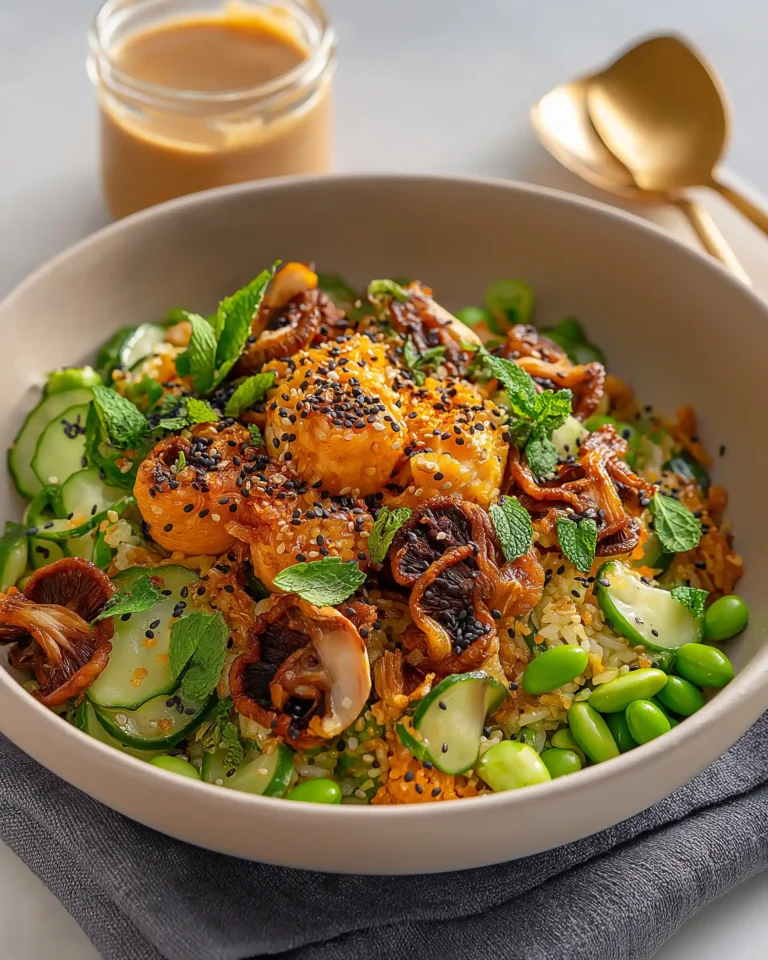
Looking for a satisfying, plant-based dish that hits all the right notes—crispy, spicy, creamy, and refreshing? This Crispy Rice Salad with Gochujang Mushrooms is the perfect combination of textures and flavors. Whether you’re on a meat-free journey or just want to try something vibrant and nutrient-dense, this dish delivers a punch with every bite. Packed with protein-rich edamame, creamy avocado, and aromatic herbs, it’s layered with crunchy rice and spicy-sweet mushrooms, all brought together with a tangy, velvety peanut sauce.
In this article, you’ll discover:
- How to make the rice ultra crispy in your oven
- Why gochujang mushrooms are a must-try umami bomb
- How to assemble the salad for maximum flavor
- Tips for prepping ahead and saving time
Mastering Crispy Rice for the Perfect Salad Base
Why Crispy Rice Is a Game-Changer in Plant-Based Meals
Crispy rice brings a rich, golden texture to dishes that are often missing that satisfying crunch. In this salad, it balances out the softness of avocado and edamame while adding a toasty flavor. Using cooked sushi rice ensures that the grains hold their shape and crisp up evenly.
Best Rice Type and Prep Method for Crispiness
Sushi rice is the preferred option because of its starchy nature. Start with ⅓ cup dry rice to yield about 1 cup cooked. Use leftover rice that’s been chilled—this removes excess moisture, allowing it to crisp instead of steam in the oven. When mixed with chili oil and baked at high heat, you’ll get crunchy clusters that hold up beautifully in a fresh salad.
Steps to Prepare:
- Spread Thinly: After mixing with chili oil, spread the rice in a single, even layer on a baking sheet lined with parchment. Clumping leads to uneven cooking.
- Stir Midway: Bake at 400°F for 30 minutes, stirring halfway to prevent over-browning and ensure consistent crisping.
- Smash for Texture: After baking, use a jar to gently crush the rice on the tray while warm. This creates smaller bits that blend perfectly into the salad, giving it a dynamic bite.
Pro Tips for Flawless Crispy Rice Every Time
- Use parchment paper to prevent sticking and make clean-up easy.
- Don’t skip the oil: The chili oil adds flavor and aids in crisping.
- Bake, don’t fry: This method is healthier and requires no deep-frying but still gives you a golden finish.
- Cool slightly before smashing: Crushing rice that’s still too hot may turn it mushy. Wait 3–5 minutes before pressing down with a jar.
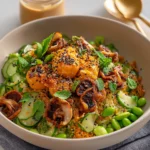
Crispy Rice Salad with Gochujang Mushrooms Recipe
- Total Time: 50 minutes
- Yield: 2 servings
- Diet: Vegan
Description
A bold, plant-based Asian-inspired salad featuring crispy chili oil-baked rice, spicy gochujang mushrooms, and a creamy peanut sauce. Balanced with fresh edamame, cucumber, avocado, and mint, this vegan dish is perfect for lunch or dinner.
Ingredients
Crispy Rice
1 cup cooked sushi rice (from ⅓ cup dry)
1 tbsp chili oil
Gochujang Mushrooms
9 oz king oyster mushrooms
6 oz shimeji mushrooms
½ tbsp gochujang paste
2 tsp tamari (low sodium)
½ tbsp maple syrup
1 tsp rice vinegar
1 tsp sesame oil
Peanut Sauce
1½ tbsp peanut butter (or tahini for nut-free)
1 tbsp fresh grated ginger
1 clove garlic
2 tbsp lime juice
2 tsp tamari (low sodium)
2 tsp maple syrup
¼ cup soy milk (or any dairy-free milk)
1 tsp gochujang paste
Salad
1½ cups shelled frozen edamame, thawed
1 medium cucumber, diced
2 spring onions, finely chopped
1 avocado, diced
¼ cup fresh mint, finely chopped
Instructions
1. Preheat the oven to 400°F (200°C).
2. Mix cooked rice with chili oil and spread thinly on a parchment-lined baking tray.
3. Bake for 30 minutes, stirring halfway. Let cool, then gently crush with a jar.
4. Slice king oyster mushroom caps and shred the stems using a fork. Separate shimeji mushrooms.
5. In a container, mix gochujang paste, tamari, maple syrup, and rice vinegar. Add mushrooms and shake to coat.
6. Cook mushrooms in a skillet for 10 minutes over medium heat until they release juices. Add sesame oil and cook another 4 minutes without stirring for browning.
7. In a blender or bowl, mix all peanut sauce ingredients until smooth.
8. Divide crispy rice, edamame, cucumber, spring onions, avocado, mint, and mushrooms between bowls.
9. Drizzle with peanut sauce and serve immediately.
Notes
Use cold, leftover rice for better crispiness.
The peanut sauce can be made in advance and stored in the fridge.
Substitute peanut butter with tahini for a nut-free version.
- Prep Time: 15 minutes
- Cook Time: 35 minutes
- Method: Baked + Sautéed
- Cuisine: Asian-Inspired
How to Make Gochujang Mushrooms That Steal the Show
What Makes Gochujang Mushrooms So Addictive?
Gochujang, a fermented Korean chili paste, adds a bold blend of heat, sweetness, and umami. When paired with mushrooms—especially meaty varieties like king oyster and shimeji—it elevates their earthy flavors and gives them a saucy, caramelized finish. In this salad, these mushrooms act almost like a savory protein, providing chew and richness that contrasts beautifully with the crisp veggies and rice.
Choosing the Right Mushrooms for Texture and Taste
This recipe uses a mix of king oyster mushrooms and shimeji mushrooms, each bringing something special to the plate:
- King Oyster Mushrooms: With their thick, dense stems, they soak up marinade like a sponge and brown beautifully when cooked. Shred the stems with a fork for pulled-meat-like texture and slice the caps thinly.
- Shimeji Mushrooms: These have a delicate, slightly nutty flavor. Just trim the base and separate them into small clusters. They cook quickly and absorb sauce well.
Marinating the Mushrooms: How to Infuse Deep Flavor
In a large container, combine:
- ½ tbsp gochujang paste
- 2 tsp tamari (low sodium)
- ½ tbsp maple syrup
- 1 tsp rice vinegar
Mix until smooth to form a rich, umami-packed marinade. Add all mushrooms, close the container, and shake vigorously. Let them sit for a few minutes to absorb the flavors. A sealed container ensures even coating without dirtying extra bowls.
Cooking Gochujang Mushrooms Like a Pro
The trick to mouthwatering mushrooms is controlled browning:
- First 10 minutes: Let them release their natural juices over medium heat.
- Add sesame oil: Once they start looking dry, pour in 1 tsp of sesame oil. Stir well.
- Do not over-stir: Let them sit undisturbed for 2 minutes to get that golden sear. Repeat once more for deeply caramelized bits.
By the end, they should be browned, sticky, and coated in a glossy layer of spicy-sweet glaze.
Creating the Perfect Peanut Sauce for Your Salad
Why This Peanut Sauce Completes the Dish
A good sauce does more than coat the ingredients—it brings them together. This creamy peanut sauce has the ideal balance of salty, sweet, tangy, and spicy. It complements the bold gochujang mushrooms and cools the palate with its nutty creaminess. Plus, it’s easy to make and can be prepared ahead of time.
If you need a nut-free alternative, tahini works just as well, offering the same richness and depth with a slightly earthier profile.
Peanut Sauce Ingredients and Flavor Breakdown
Here’s what you’ll need:
- 1½ tbsp peanut butter (or tahini for nut-free)
- 1 tbsp fresh grated ginger: Adds heat and brightness
- 1 clove garlic: For a savory punch
- 2 tbsp lime juice: Brings acidity and freshness
- 2 tsp tamari (low sodium): Provides umami depth
- 2 tsp maple syrup: Sweetness to balance the heat
- ¼ cup dairy-free milk (soy preferred): Thins the sauce to a pourable consistency
- 1 tsp gochujang paste: Reinforces the spicy-sweet base note
How to Blend It All Together Smoothly
You have two options:
- Blender Method: Add all ingredients to a small blender. Blend until completely smooth. This method creates a silky texture.
- Whisk Method: If you don’t have a blender, finely mince the garlic and ginger, then vigorously whisk everything together in a bowl until creamy.
Adjust the thickness by adding more dairy-free milk a spoonful at a time. The consistency should be creamy but pourable, like a thick dressing.
Storing and Using Your Peanut Sauce
- Refrigerate for up to 4 days in an airtight container.
- Use as a dip for raw veggies or drizzle it over grain bowls, wraps, or noodle salads.
- Warm slightly before using to loosen the texture if it thickens in the fridge.
This sauce doesn’t just enhance the salad—it becomes part of the experience, coating every bite in flavor.
Building the Ultimate Crispy Rice Salad with Fresh Veggies and Herbs
Why Fresh Ingredients Make a Difference in Texture and Taste
The heart of this salad lies in its refreshing vegetables and vibrant herbs. While the crispy rice and spicy mushrooms bring heat and crunch, these elements add coolness, hydration, and a clean bite that makes the entire dish feel balanced and energizing. Each ingredient is selected not just for taste, but also for texture, color, and nutrition.
Key Ingredients to Layer the Salad Right
Here’s what you’ll be working with:
- 1½ cups shelled frozen edamame (thawed): These little green gems bring a solid protein boost and a tender, satisfying bite.
- 1 medium cucumber, diced: Adds crispness and a mild cooling effect, perfect for balancing heat from the mushrooms and sauce.
- 2 spring onions, finely chopped: These provide sharp, oniony brightness that lifts all the other flavors.
- 1 ripe avocado, diced: Brings a creamy, buttery texture that contrasts with the crispy rice and crunchy veggies.
- ¼ cup fresh mint, finely chopped: A pop of herbal freshness that brightens up the whole salad.
Assembly Tips for Maximum Visual Appeal and Taste
Assembling your salad thoughtfully not only improves the eating experience but makes it more visually appealing:
- Start with the crispy rice: It forms the hearty base layer and soaks up the sauce beautifully without turning soggy.
- Add edamame and cucumbers next: These cool elements go well directly over the warm rice.
- Top with mushrooms: Layer the spicy gochujang mushrooms over the vegetables to allow their flavors to infuse downward.
- Scatter spring onions and mint: These delicate ingredients should stay on top to retain their freshness.
- Finish with avocado: Add it last to prevent it from breaking down or browning.
You can divide the components between two large bowls or plates. This allows the textures to remain distinct until the sauce is added.
Serving Ideas for Texture-Lovers
- Drizzle sauce just before serving to maintain texture contrast.
- Add crushed peanuts or sesame seeds on top for an optional crunch boost.
- Serve immediately for the crispiest rice experience. Leftovers are still good but lose some crispiness.
Time-Saving Prep Tips and Smart Storage Ideas
How to Prep Ahead Without Sacrificing Freshness
This Crispy Rice Salad with Gochujang Mushrooms may look gourmet, but it’s surprisingly meal-prep friendly. You can easily divide the work across a couple of days or prep multiple components at once for quicker assembly when you’re ready to eat.
Here’s how to make it efficient:
- Make the rice ahead of time: Cook your sushi rice the night before and refrigerate it. Chilled rice crisps up better and saves time.
- Marinate the mushrooms: Mix the gochujang marinade and toss it with the mushrooms the day before. Let them sit overnight in the fridge for deeper flavor.
- Prep the sauce: Blend or whisk the peanut sauce and store it in an airtight jar. It holds for up to 4 days in the refrigerator.
- Chop the veggies early: Dice your cucumbers, onions, and herbs and store them in sealed containers. Keep the avocado whole until just before serving to avoid browning.
This kind of modular prep means you can enjoy a freshly assembled salad in under 10 minutes on busy days.
How to Store Each Component for Maximum Shelf Life
If you’re not eating everything in one sitting, here’s how to keep the leftovers tasting great:
| Component | Storage Method | Shelf Life |
|---|---|---|
| Crispy Rice | Airtight container, room temp or fridge | Up to 3 days |
| Gochujang Mushrooms | Sealed container, refrigerated | Up to 4 days |
| Peanut Sauce | Jar or bottle, refrigerated | Up to 4 days |
| Fresh Veggies | Separate containers, refrigerated | Up to 2-3 days |
| Assembled Salad | Airtight container, refrigerated | Best eaten same day |
Keep crispy rice separate until ready to eat to maintain texture.
Repurposing Leftovers Without Getting Bored
You can transform leftover components into other meals:
- Wrap it: Turn everything into a rice paper or lettuce wrap.
- Bowl it: Mix with cooked quinoa or brown rice for a grain bowl.
- Roll it: Use the mushrooms and veggies in a nori roll or sushi burrito.
This flexibility makes it a perfect recipe for meal planning and avoiding food waste.
Nutritional Benefits of This Plant-Based Power Bowl
Why This Crispy Rice Salad Is a Nutritional Powerhouse
This Crispy Rice Salad with Gochujang Mushrooms isn’t just a treat for the taste buds—it’s packed with nutrients that support energy, digestion, and overall wellness. Each component is thoughtfully chosen to create a balanced vegan meal rich in plant-based protein, fiber, healthy fats, and essential vitamins.
With about 698 calories per serving, this dish is satisfying without being overly heavy. It works well as a main course for lunch or dinner, especially for active lifestyles or anyone wanting to fuel their day with clean, whole-food ingredients.
Macronutrient Breakdown: Fueling Your Body Naturally
Let’s look at what you get per serving:
| Nutrient | Amount | Benefit |
|---|---|---|
| Calories | 698 kcal | Sustains energy levels |
| Protein | 30 g | Builds muscle, supports metabolism |
| Carbohydrates | 56 g | Main energy source |
| Fat | 34 g | Includes healthy fats from avocado & sesame |
| Fiber | 19 g | Aids digestion, promotes satiety |
Key Ingredients and Their Nutritional Highlights
- Edamame: A complete plant-based protein, rich in iron, calcium, and folate. It’s also high in fiber, which supports gut health.
- Avocado: Loaded with monounsaturated fats, potassium, and antioxidants that support heart health and skin vitality.
- Cucumber & Spring Onion: Low in calories but high in hydration and vitamin K.
- Mushrooms: Provide B vitamins, selenium, and ergothioneine, a unique antioxidant found in fungi.
- Mint: Not just flavorful—it helps digestion and offers anti-inflammatory compounds.
- Peanut Sauce: Offers protein and healthy fats from nuts or seeds, along with zinc and magnesium.
A Plant-Based Meal That Hits All the Right Notes
This salad checks every box for a satisfying, whole-food-based meal:
- High in fiber to keep you full
- Rich in plant protein for muscle repair
- Balanced with healthy fats that support hormone health
- Full of micronutrients from fresh herbs, ginger, lime juice, and colorful vegetables
And best of all? It’s made from real, accessible ingredients, meaning no processed meat alternatives or fillers—just clean fuel that tastes amazing.
Conclusion: A Bold, Balanced Salad You’ll Crave Again and Again
This Crispy Rice Salad with Gochujang Mushrooms is more than just a beautiful bowl—it’s a bold celebration of texture, flavor, and nourishment. From the crunch of chili-oil roasted rice to the umami-rich mushrooms and creamy, tangy peanut sauce, every bite delivers something special. It’s the kind of meal that feels indulgent yet energizing, rich yet clean, and satisfying while being completely plant-based.
Whether you’re vegan, flexitarian, or just looking for a refreshing spin on your usual meals, this dish checks all the boxes: high in protein, full of fiber, packed with colorful veggies, and powered by whole foods. It’s simple enough for weekday prep yet impressive enough for guests.