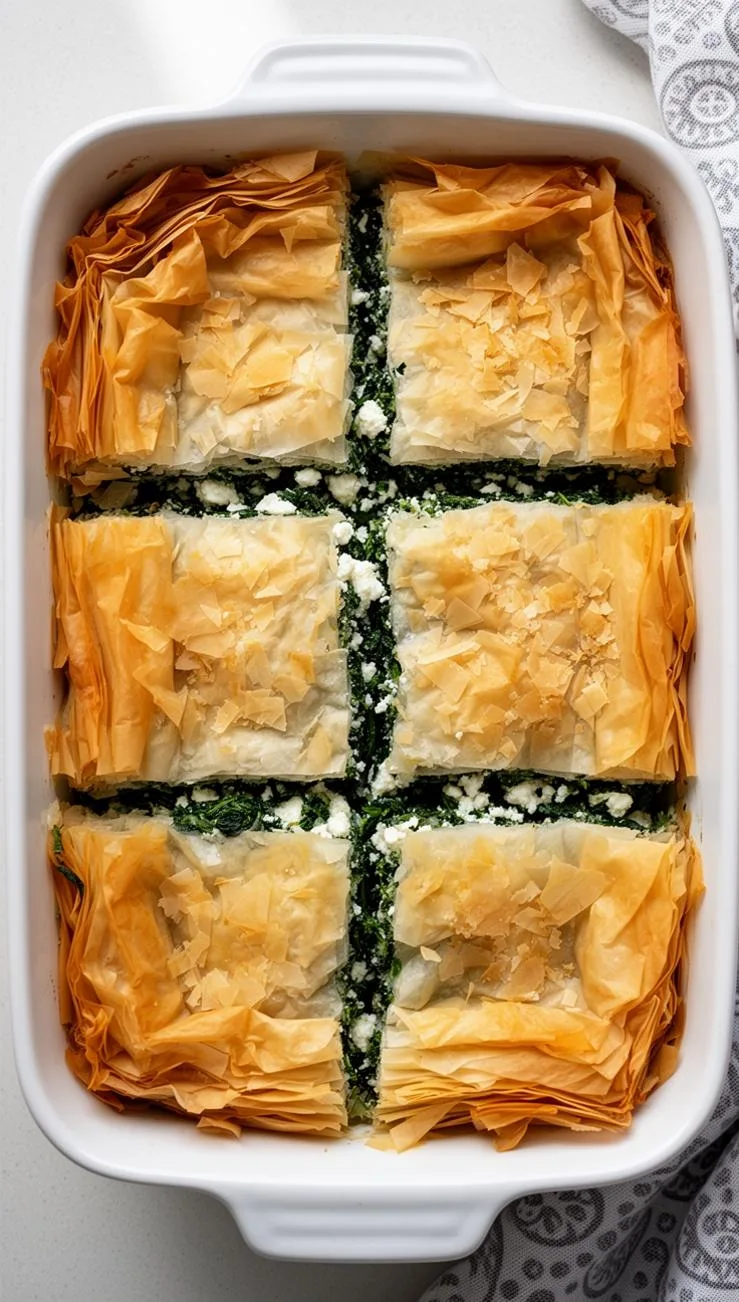
Spanakopita pie is a beloved Greek classic, celebrated for its flaky phyllo layers and savory spinach and feta filling. This delightful pastry offers a wonderful balance of textures and flavors, making it a versatile dish for any occasion. Whether you’re seeking a delicious appetizer, a satisfying vegetarian main, or a flavorful side dish, this recipe for authentic spanakopita pie delivers.
Benefits of Spanakopita Pie
This traditional Greek pie is not only delicious but also offers nutritional advantages. Spinach, the star ingredient, is packed with vitamins A, C, and K, as well as iron and magnesium. Feta cheese provides a good source of calcium and protein, contributing to bone health and satiety. Enjoying spanakopita in moderation can be part of a balanced diet for many individuals.
However, it’s important to consider dietary restrictions. Due to the cheese content, those who are lactose intolerant may need to opt for dairy-free alternatives or consume it in smaller portions. The phyllo dough, while delicious, is made with oil and flour, so individuals monitoring their carbohydrate or fat intake might want to be mindful of portion sizes.
Ingredients: Spinach and Feta Filling
16 oz frozen chopped spinach, thawed and squeezed dry
2 bunches fresh flat leaf parsley, stems trimmed and finely chopped
1 large yellow onion, finely diced
2 garlic cloves, minced
2 tablespoons extra virgin olive oil
4 large eggs
10.5 oz Dodoni Feta Cheese or Athenos Feta Cheese, crumbled
2 teaspoons dried dill weed
1 teaspoon freshly ground black pepper
Crust
1 package phyllo pastry sheets, about 16 oz, thawed according to package instructions
1 cup extra virgin olive oil, plus more if needed for brushing
Equipment
Large mixing bowl
Skillet
Measuring cups and spoons
Sharp knife
Cutting board
Baking dish (e.g., 9×13 inch)
Pastry brush
Rolling pin (optional, for flattening phyllo if needed)
Step by Step Instructions
Begin by preparing the spinach and feta filling. In a large skillet, heat two tablespoons of extra virgin olive oil over medium heat. Add the finely diced yellow onion and sauté until softened and translucent, about 5-7 minutes. Stir in the minced garlic and cook for another minute until fragrant, being careful not to burn it.
Next, incorporate the thawed and thoroughly squeezed dry chopped spinach into the skillet. Cook for about 5 minutes, stirring occasionally, allowing any excess moisture to evaporate. This step is crucial for preventing a watery filling in your spanakopita. Remove the skillet from the heat and let the mixture cool slightly.
In a large mixing bowl, whisk the four large eggs until well combined. Add the crumbled feta cheese to the eggs, along with two teaspoons of dried dill weed and one teaspoon of freshly ground black pepper. Stir in the sautéed onion and garlic and spinach mixture. Gently fold everything together until evenly distributed.
Now, it’s time to assemble the crust for your spanakopita pie. Carefully unroll the thawed phyllo dough and lay it flat on a clean, dry surface. Using a pastry brush, lightly brush the bottom of your baking dish with extra virgin olive oil. Place one sheet of phyllo dough into the dish, allowing it to overhang the sides. Brush this sheet lightly with olive oil.
Continue layering the phyllo sheets, brushing each one individually with olive oil. It is traditional to use about 8-10 sheets for the bottom layer to create a sturdy base. You can tear or overlap the sheets to fit your baking dish; the rougher edges will create a rustic charm. Ensure each layer is well oiled to achieve that signature crispiness.
Once the bottom layers of phyllo are in place, carefully spoon the prepared spinach and feta filling evenly over the top. Spread it out gently to create an even layer across the entire surface of the pie. Try not to press down too firmly on the filling, as this can compact it and make it dense.
Now, begin layering the phyllo dough for the top crust. Again, brush each sheet generously with olive oil before placing it on top of the filling. Continue this process until you have used another 8-10 sheets of phyllo, creating a beautiful, golden-brown top. Fold the overhanging edges of the bottom phyllo layers inward to neatly enclose the filling and the top phyllo sheets.
Once assembled, use a sharp knife to score the top layers of phyllo into serving portions. This will make it easier to cut through the pie after baking without disturbing the delicate layers. Lightly brush the very top layer of phyllo with olive oil for optimal browning and crispiness.
Preheat your oven to 375°F (190°C). Place the assembled spanakopita pie in the preheated oven and bake for 40-50 minutes, or until the top is deeply golden brown and the phyllo is exceptionally crisp. If the top starts to brown too quickly, you can loosely tent it with aluminum foil. Allow the pie to rest for at least 15-20 minutes before cutting and serving.
Storage Instructions
Proper storage is key to maintaining the delightful texture and flavor of your spanakopita pie. Once cooled completely, leftovers can be stored in an airtight container in the refrigerator for up to 3 days. The crispy exterior may soften slightly over time when refrigerated.
For longer storage, you can freeze the baked spanakopita. Ensure it has cooled down to room temperature before wrapping it tightly in plastic wrap, followed by a layer of aluminum foil, or place it in a freezer-safe container. Frozen spanakopita will retain its best quality for up to 2-3 months.
To reheat, it is best to bake it in a preheated oven at around 350°F (175°C) until heated through and the crust is re-crisped. This method will help revive the flaky texture better than microwaving. Reheating from frozen will take longer, approximately 30-40 minutes.
Variations and Substitutions
While the traditional spanakopita pie features spinach and feta, feel free to explore delicious variations. You can add a handful of chopped fresh dill or mint to the filling for an extra burst of freshness. Some recipes incorporate a small amount of ricotta cheese alongside the feta for a creamier texture.
For a heartier version, consider adding cooked and crumbled leeks or finely chopped mushrooms to the filling. If you are dairy-free, experiment with firm silken tofu blended with nutritional yeast and dairy-free feta alternatives. Using different types of cheese, like a mild goat cheese or a sharp Gruyère, can also offer unique flavor profiles. Keep in mind that substitutions might alter the cooking time or texture slightly.
Tips and Tricks for Perfect Spanakopita
Achieving the perfect spanakopita lies in a few key techniques. Ensure your frozen spinach is squeezed as dry as humanly possible; excess water is the enemy of crisp phyllo. When working with phyllo dough, always keep the sheets covered with a damp (not wet) kitchen towel to prevent them from drying out and becoming brittle.
Brush each layer of phyllo generously with olive oil. Don’t be shy; this is what creates the signature delicate, flaky layers. If your phyllo sheets tear, don’t worry. Simply patch them up with another piece or embrace the rustic look – the olive oil will help them fuse together during baking.
Scoring the top of the spanakopita before baking makes serving much easier and prevents the crust from shattering. Resting the pie after baking allows the filling to set and the layers to settle, resulting in cleaner cuts. Using good quality feta cheese will significantly enhance the overall flavor of your pie.
Notes on Preparation
When thawing phyllo dough, follow the package instructions precisely. Usually, this involves waiting until it reaches room temperature while still in its packaging. This prevents condensation, which can make the delicate sheets sticky and difficult to handle. Ensure all your filling ingredients are at room temperature before mixing to help them combine more easily.
The type of feta cheese you choose can influence the final taste. A good quality Greek feta will provide a more authentic and robust flavor. If you’re sensitive to salt, you might want to rinse the feta before crumbling it, although this can slightly dilute its flavor. Squeezing the spinach dry cannot be overemphasized for success.
Serving Suggestions
Spanakopita pie is incredibly versatile and pairs beautifully with a variety of dishes. Serve it as a crowd-pleasing appetizer at gatherings, cut into smaller squares. It makes an excellent vegetarian main course when accompanied by a fresh Greek salad with tomatoes, cucumbers, and olives.
It also works wonderfully as a side dish alongside grilled meats, fish, or roasted vegetables. A dollop of plain Greek yogurt or a light lemon-tahini dressing can be a delightful accompaniment, adding a creamy contrast to the flaky pastry.
Conclusion
This recipe for spanakopita pie offers a straightforward path to creating an authentic and delicious Greek culinary experience in your own kitchen. The combination of tender, savory spinach and feta, encased in layers of impossibly crisp, golden phyllo, is truly irresistible. It’s a dish that’s sure to impress, whether served as a starter, a main, or a delightful side.
Mastering this classic Greek pastry brings a rewarding sense of accomplishment, and the delicious results speak for themselves. Embrace the process, savor the aromas, and enjoy every flaky, flavorful bite of your homemade spanakopita pie. It’s a testament to simple ingredients yielding extraordinary taste.
FAQs
How do I prevent my spanakopita from getting soggy?
The key to preventing sogginess is to thoroughly squeeze out all excess moisture from the spinach. Ensure your filling is not watery before adding it to the phyllo. Also, brush each phyllo layer generously with oil for optimal crispness.
Can I make spanakopita ahead of time?
Yes, you can assemble the spanakopita ahead of time and refrigerate it before baking. You may need to add a few extra minutes to the baking time. For best results with the crust, consider freezing the unbaked pie and baking it directly from frozen, adding extra baking time.
What kind of feta cheese is best for spanakopita?
Authentic Greek feta cheese, typically made from sheep’s milk or a blend of sheep’s and goat’s milk, is highly recommended for the best flavor and texture. It has a firm yet crumbly consistency and a characteristic tangy taste that is essential for traditional spanakopita.
Can I use fresh spinach instead of frozen?
Yes, you can use fresh spinach. You will need about 2 pounds (900g) of fresh spinach. Wash it thoroughly, remove the tough stems, and wilt it in a pan with a little olive oil. Then, drain and squeeze out as much water as possible before proceeding with the recipe.