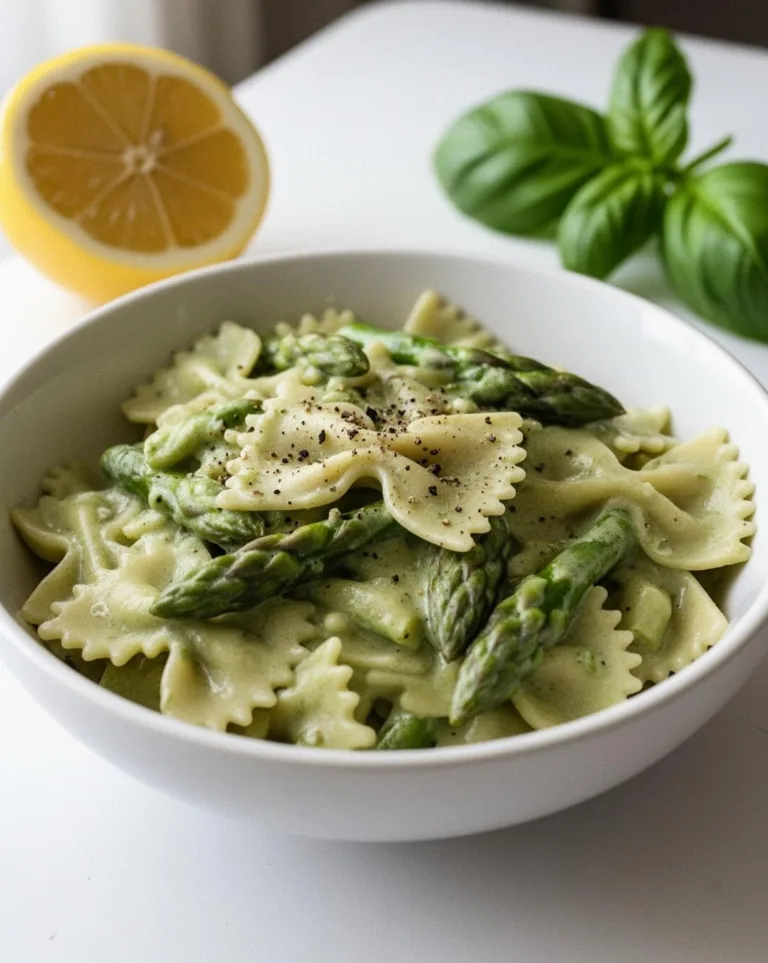
Creamy Garlic Asparagus Pasta with Silky Flavor
Taste the bright, buttery taste of spring in every bite of creamy garlic asparagus pasta.
A quick weeknight dinner, this dish blends crisp asparagus with a rich, garlicky sauce.
Ready in under 30 minutes, it works as a comforting vegetarian main or a side for grilled chicken.
Ideal for busy families, the recipe stays simple without sacrificing gourmet flair.
Why This Dish Works for You
The sauce delivers a dose of heart‑healthy monounsaturated fats from olive oil, while asparagus adds vitamin K, folate, and antioxidants.
Garlic boosts immune function and may lower blood pressure, making the meal both tasty and nutritious.
Whole‑wheat pasta adds fiber and steady‑release carbs, perfect for sustaining energy through a busy afternoon.
People watching calories can reduce butter or swap half the pasta for zucchini noodles for a lower‑calorie version.
Ingredients
- 200 g (7 oz) whole‑wheat fettuccine or linguine
- 12 oz (340 g) fresh asparagus, trimmed and cut into 2‑inch pieces
- 2 tablespoons extra‑virgin olive oil
- 4 cloves garlic, minced
- 1 cup (240 ml) heavy cream or a 1:1 blend of half‑and‑half and milk
- ½ cup (50 g) freshly grated Parmesan cheese
- ¼ teaspoon red‑pepper flakes (optional)
- Salt and freshly cracked black pepper to taste
- Fresh basil leaves, torn for garnish
Equipment Needed
- Large pot for boiling pasta
- Colander
- Large skillet or sauté pan
- Wooden spoon or silicone spatula
- Measuring cups and spoons
- Cheese grater
- Kitchen timer
Step by Step Instructions
Bring a pot of salted water to a rolling boil, then add the pasta and cook until al dente, about 9‑10 minutes.
Reserve ½ cup of cooking water, then drain the pasta and set aside.
While the pasta cooks, heat olive oil in a skillet over medium heat until shimmering.
Add the asparagus, seasoning with a pinch of salt, and sauté for 3‑4 minutes until bright green and just tender.
Reduce heat to medium‑low and stir in the minced garlic, cooking for 30 seconds until fragrant but not browned.
Pour the cream into the pan, stirring continuously to avoid lumps, and let it simmer gently for 2‑3 minutes.
Mix in the grated Parmesan, allowing it to melt and thicken the sauce; if it becomes too thick, add reserved pasta water gradually.
Season with red‑pepper flakes, salt, and black pepper, tasting for balance before moving to the next step.
Add the cooked pasta directly into the skillet, tossing to coat each strand with the silky sauce.
Continue to toss for another minute, letting the pasta absorb the flavors and achieve a glossy finish.
Remove the pan from heat, sprinkle torn basil over the top, and give one final gentle stir.
Serve immediately on warmed plates, offering extra Parmesan at the table for those who love extra richness.
For a cream‑lighter version, substitute the heavy cream with a blend of low‑fat milk and Greek yogurt, adding the yogurt off the heat to prevent curdling.
If a lower‑sodium profile is desired, use reduced‑salt Parmesan and limit added salt, relying on the natural flavor of the garlic and asparagus.
To boost protein, fold in cooked diced chicken breast, shrimp, or even canned white beans during the final toss.
A pinch of lemon zest added at the end lifts the sauce, creating a bright counterpoint to the garlic depth.
If the sauce separates, whisk in a splash of pasta water or a teaspoon of butter to bring it back together.
For extra crunch, reserve some sautéed asparagus stems and sprinkle them over the finished dish as garnish.
Adjust the sauce consistency by adding more cream for richer texture or more broth for a lighter coating.
Enjoy the meal while hot; the pasta continues to soften as it sits, so serve promptly for the perfect bite.
Storage Guidelines
Cool the leftover creamy garlic asparagus pasta to room temperature within two hours, then transfer to an airtight container.
Refrigerate for up to three days; the sauce may thicken, so gently reheat with a splash of milk or broth.
When reheating, use a skillet over low heat, stirring frequently to restore silkiness without scorching.
Freezing is possible but not ideal; if needed, portion into freezer‑safe bags, freeze for one month, and thaw overnight before reheating gently.
Variations and Substitutions
Swap whole‑wheat pasta for gluten‑free rice noodles or shirataki strands for a low‑carb twist.
Replace asparagus with broccoli florets or green beans for a different green veggie profile while keeping the same cooking method.
Use goat cheese or vegan nutritional yeast instead of Parmesan for a tangy, dairy‑free alternative.
Add a dash of smoked paprika or a spoonful of pesto during the final toss for an unexpected flavor layer.
Tips and Tricks for Perfection
Cook the pasta just shy of al dente; it will finish cooking in the sauce, preventing mushiness.
Always save pasta water; the starches help bind the sauce to the noodles, creating a restaurant‑quality coating.
Trim asparagus at the base and slice on a diagonal to increase surface area, which speeds up cooking and adds visual appeal.
Garlic should never be overcooked; a quick sauté releases aroma without bitterness, preserving its health benefits.
Use a heavy‑bottomed skillet to distribute heat evenly and avoid hot spots that can scorch the cream.
Taste and adjust seasoning at each stage; the Parmesan already adds salt, so add extra salt sparingly.
For a smoky note, briefly char the asparagus under a broiler before adding to the pan; this adds depth without extra ingredients.
Finish with a drizzle of high‑quality extra‑virgin olive oil for a glossy sheen and a boost of healthy fats.
Additional Notes
This recipe is naturally vegetarian and can be made vegan by using plant‑based cream and nutritional yeast.
The dish supplies roughly 12 grams of protein per serving, thanks to the cheese and pasta, making it a balanced meal.
People with lactose intolerance should opt for lactose‑free cream or coconut‑based cream alternatives.
If you’re watching sodium, choose a low‑salt Parmesan and limit added salt; the natural flavors remain robust.
The creamy base can double as a sauce for other pasta dishes, such as mushroom or spinach medleys.
Pair this meal with a crisp white wine like Sauvignon Blanc to complement the garlic and asparagus’s freshness.
Remember that the key to a velvety texture lies in gentle simmering; a rolling boil will cause the cream to curdle.
Enjoy the process; cooking this dish is as rewarding as the final flavorful bite.
Serving Suggestions
Plate the pasta in shallow bowls, sprinkle fresh basil and a light grind of black pepper, and serve with a side of mixed greens dressed in lemon vinaigrette.
A crusty baguette brushed with olive oil and garlic makes a perfect accompaniment for soaking up any extra sauce.
Consider a glass of chilled sparkling water with a slice of cucumber for a refreshing, non‑alcoholic pairing.
This presentation turns a quick dinner into an elegant, restaurant‑style experience.
Conclusion
Creamy garlic asparagus pasta offers a delightful blend of bright vegetables, indulgent sauce, and wholesome carbs in a single pan.
Its balance of protein, fiber, and antioxidants makes it a satisfying meal for busy nights and relaxed weekends alike.
Adjust the richness, swap ingredients, or add a protein boost to suit any dietary preference without losing the comforting essence.
With simple steps, fresh ingredients, and a few pro tips, you’ll master a dish that feels both home‑cooked and gourmet.
Frequently Asked Questions
Can I use frozen asparagus for this recipe?
Yes, thaw and pat dry before sautéing; add a minute to the cooking time to ensure it heats through.
What pasta shape works best?
Fettuccine, linguine, or tagliatelle hold the sauce well, but any long, thin noodle will do.
Is the dish suitable for a low‑calorie diet?
Swap heavy cream for half‑and‑half, use less cheese, and increase the asparagus-to-pasta ratio for fewer calories.
How do I prevent the sauce from separating?
Keep the heat low, stir constantly, and add a splash of pasta water or butter if the sauce looks grainy.
Can I make this recipe dairy‑free?
Replace cream with coconut milk or oat cream and use nutritional yeast instead of Parmesan for a similar umami flavor.