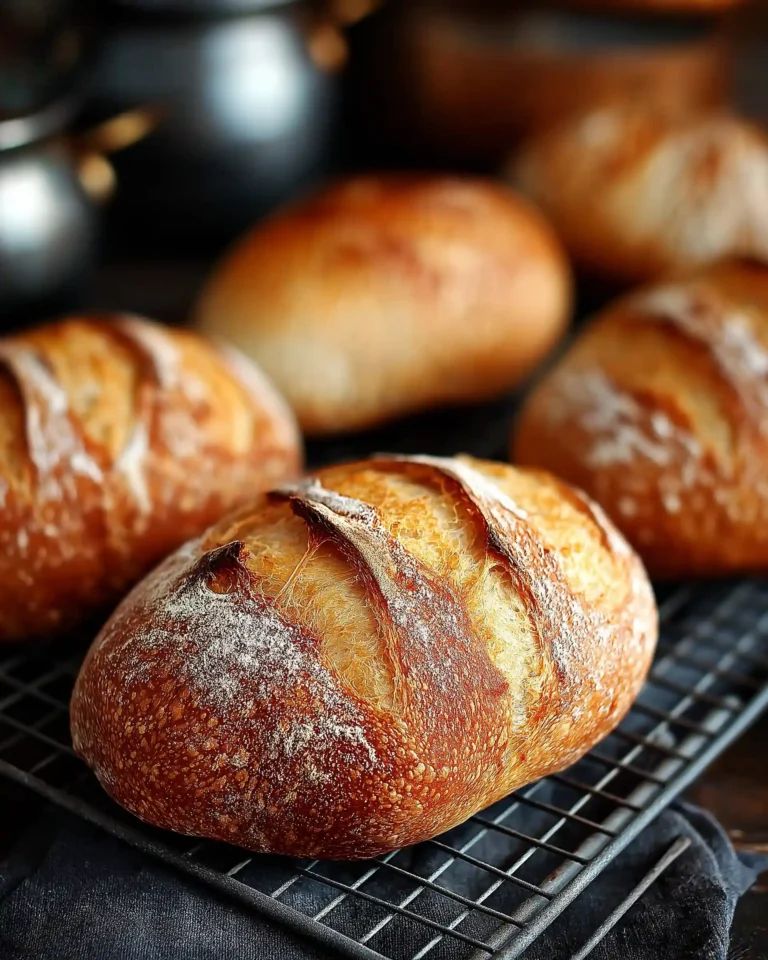
There’s nothing quite like the aroma of freshly baked rolls wafting through your kitchen, especially when those rolls have the signature crisp crust and tender interior of traditional German Brötchen. The best part? You don’t need to be an experienced baker or spend all day kneading dough. With this No Knead German Crusty Rolls Recipe, you can recreate the iconic texture and flavor of these bakery-style delights right in your own home. This method uses minimal yeast, a slow overnight rise, and a clever shaping technique to produce bakery-quality rolls that are crusty on the outside and pillowy on the inside. Whether you’re preparing breakfast for the family or looking to impress with a bread basket at dinner, these rolls will quickly become a staple in your kitchen. Let’s dive into how to master these authentic, no-fuss German rolls from scratch.
The Beauty of No Knead Baking
Why No Knead Dough Works for Crusty Rolls
Traditional bread recipes often involve intense kneading to develop gluten, but the no knead method relies on time instead of effort. The long fermentation process, usually overnight, allows the gluten strands to form naturally as the dough rests. This hands-off approach makes it perfect for both beginner bakers and those who simply want a low-effort way to achieve professional results. The extended rise also enhances flavor, giving the finished rolls a subtle tang and deep aroma.
The Science Behind the Crusty Exterior
One of the standout features of a great German roll is the crust. The secret lies in steam and heat. During baking, steam in the oven helps keep the outer dough layer moist during the first few minutes. This allows it to expand fully before hardening, forming a golden, crisp shell. Using a baking stone and baking in a hot, preheated oven also boosts heat retention, further intensifying the crustiness.
Key Benefits of a No Knead Recipe
- Minimal effort: Mix, wait, shape, bake. No need for kneading or complicated folding techniques.
- Better flavor: Long fermentation enhances depth and complexity.
- Great texture: Soft crumb with open holes, chewy edges, and that coveted crunch outside.
- Flexible preparation: You can make the dough the night before and bake fresh rolls in the morning or for dinner.
The appeal of this method lies in its simplicity. With just a few pantry staples and some patience, you can create authentic German rolls that rival any bakery version.
Essential Ingredients and Their Role in the Recipe
Understanding the Flour Choice
The foundation of any bread is the flour, and this No Knead German Crusty Rolls Recipe calls for 1000 grams of bread flour. Bread flour contains a higher protein content than all-purpose flour, typically around 12-14%. This protein, when hydrated, forms gluten, which gives the dough its structure and elasticity. The high protein is crucial in developing the strong gluten network needed for a chewy texture and firm shape in crusty rolls.
The Role of Minimal Yeast
Only 0.2 grams of instant yeast are used in this recipe, a tiny amount compared to conventional bread recipes. While it may seem like not enough to make the dough rise, the long fermentation period compensates for it. The small amount of yeast works slowly overnight, giving the dough plenty of time to ferment. This slow rise results in a superior flavor and better texture, all without any kneading.
Water: Hydration That Transforms
With 680 grams of water, the hydration level in this dough is quite high. High hydration makes the dough more fluid, encouraging open crumb structure and allowing it to ferment more effectively. Water also activates the gluten-forming proteins in flour, helping to build strength in the dough over time without manual kneading.
Why Salt is Not Optional
The recipe includes 22 grams of salt, which serves several vital roles. First, it controls yeast activity, preventing the dough from fermenting too fast. Second, it strengthens gluten formation, making the dough more elastic. Most importantly, salt enhances flavor, giving the finished rolls a rich, well-rounded taste that complements the crust and crumb.
Simplicity with Power
Here’s a quick overview of the ingredients used and their contribution:
| Ingredient | Amount | Function |
|---|---|---|
| Bread Flour | 1000 g | Builds structure, gluten formation |
| Instant Yeast | 0.2 g | Leavens dough slowly over time |
| Water | 680 g | Hydrates dough, aids gluten, improves texture |
| Salt | 22 g | Controls fermentation, enhances taste |
No Knead German Crusty Rolls Recipe
- Total Time: 12 H & 50 M
- Yield: 18 rolls
- Diet: Vegan
Description
Authentic no knead German crusty rolls with a crispy shell and airy interior. Perfect for breakfast, sandwiches, or soups. Minimal ingredients, maximum flavor.
Ingredients
1000 grams bread flour
0.2 grams instant yeast
680 grams water
22 grams salt
Instructions
1. In a large bowl, whisk together the bread flour and instant yeast.
2. In a separate bowl, mix the water and salt until dissolved.
3. Add the water and salt mixture to the flour mixture and mix with your hand until fully moistened.
4. Cover and let the dough ferment at room temperature for 12 to 14 hours.
5. Turn the dough onto a floured surface and divide into 18 pieces (about 94g each).
6. Preshape each piece into a round and let rest for 25 minutes.
7. Shape the dough tightly into rounded oblongs and place them seam side down on a floured couche or parchment-lined baking sheet.
8. Cover and let rise for one hour.
9. Preheat oven to 450°F with a baking stone on the middle rack.
10. Score the rolls and bake 9 at a time with steam for 15–20 minutes.
11. Transfer to a wire rack and cool completely.
Notes
To generate steam, place a pan of hot water in the oven or mist the oven walls before baking.
This recipe can be halved easily.
Use a kitchen scale for accurate portioning.
Best served fresh or reheated in oven to restore crust.
- Prep Time: 30 Min
- Cook Time: 20 Min
- Category: Bread
- Method: Baking
- Cuisine: German
Mastering the No Knead Method – Step-by-Step Process
Mixing Without Kneading
The first step in making these German crusty rolls is blending the dry and wet ingredients without any kneading. Start by whisking the bread flour and instant yeast together in a large bowl. This ensures even distribution of yeast throughout the flour, which is important for consistent fermentation.
In a separate bowl, dissolve the salt in the water. Adding salt directly to yeast can sometimes slow its activation, so mixing the salt into the water first helps it integrate evenly without interfering with yeast performance.
Once ready, pour the salt-water mixture into the flour-yeast blend. Use your hand to mix until no dry patches remain and everything is fully moistened. The dough will be shaggy, sticky, and loose — and that’s exactly what you want.
The Importance of the Long Rest
Cover the bowl with a tight lid, plastic wrap, or a clean kitchen towel. Let the dough ferment at room temperature for 12 to 14 hours. During this time, the gluten naturally develops and the yeast slowly ferments the dough. You’ll know it’s ready when the dough has doubled in size and is full of bubbles.
This slow proofing method gives your rolls a deeper, more complex flavor and an open, airy crumb that’s hard to achieve with quick-rise methods.
Dividing and Shaping the Dough
After fermentation, gently turn the dough out onto a floured surface. Be careful not to deflate it too much. Divide the dough into 18 equal portions, approximately 94 grams each. Use a kitchen scale if precision is important to you.
Lightly shape each portion into a round and let them rest for 25 minutes. This rest period allows the dough to relax, making final shaping easier.
Next, shape each dough ball into a rounded oblong. Think small, tight football shapes. This tight shaping is key to giving the rolls their defined form and helping them rise upward rather than spread out.
Place the shaped rolls seam side down on a floured couche or a parchment-lined baking sheet. Cover them loosely and let rise for one hour.
Creating Bakery-Style Steam at Home
Before baking, preheat your oven to 450°F (232°C). Place a baking stone on the middle rack, if you have one. The stone helps to transfer heat quickly and evenly to the bottom of the rolls, enhancing the crust.
To mimic steam, which is essential for crust development, you can place a pan of hot water on the bottom oven rack or spray the inside of your oven with water just before closing the door.
Scoring and Baking
Score each roll with a sharp knife or lame to control how they expand in the oven. Bake the rolls in two batches of nine to allow space for airflow. Bake for 15 to 20 minutes, or until the tops are golden and sound hollow when tapped.
Transfer the rolls to a wire rack to cool completely. This allows steam to escape from the bottom and prevents sogginess.
Summary Table: Process Breakdown
| Step | Time | Purpose |
|---|---|---|
| Mixing Dough | 10 minutes | Combine ingredients evenly |
| First Fermentation | 12–14 hours | Develop gluten, enhance flavor |
| Dividing & Pre-shaping | 25 minutes | Allow dough to rest and relax |
| Final Shaping & Proofing | 1 hour | Build tension, final rise |
| Baking | 15–20 minutes | Create crust, finish cooking |
Storage, Reheating, and Freezing Tips for German Crusty Rolls
How to Keep Rolls Fresh Longer
Freshly baked rolls are best enjoyed within a few hours, especially when they’ve been baked to crusty perfection. But when you have extras, proper storage is key to maintaining texture and flavor. Here’s how to do it:
- Room Temperature: Store cooled rolls in a paper bag or wrap them loosely in a clean kitchen towel. This allows airflow, preventing sogginess. They’ll stay fresh for up to 2 days. Avoid plastic bags unless you prefer a softer crust, as plastic traps moisture and softens the crisp outer layer.
- Bread Box: A ventilated bread box provides the perfect environment for keeping rolls crusty on the outside and soft on the inside for an extra day or two.
Reheating Rolls Without Losing Their Crunch
To bring day-old rolls back to life, reheating them correctly matters. The goal is to refresh the crust without drying out the crumb. Follow these simple steps:
- Preheat your oven to 375°F (190°C).
- Lightly mist the rolls with water or wrap them in a damp paper towel (if microwaving).
- Bake for 5 to 8 minutes in the oven or warm in a microwave for 15 to 20 seconds if you’re in a hurry (though the crust will soften).
If you want that fresh-from-the-oven crunch, the oven method is always best.
Freezing for Later Use
One of the biggest advantages of this no knead German crusty rolls recipe is that it freezes beautifully. You can freeze the rolls after baking or even before the final bake.
- After Baking: Let the rolls cool completely, then place them in a freezer-safe bag. They’ll keep well for up to 3 months. When ready to enjoy, thaw at room temperature and reheat in a 375°F oven for 5–8 minutes to refresh the crust.
- Before Baking: After shaping and proofing, place the rolls on a tray and freeze until solid. Then transfer them to a freezer bag. When ready to bake, allow to thaw and rise for a couple of hours before baking as directed.
Smart Tips for Batch Baking
Making a full batch of 18 rolls may feel like a lot, but it’s ideal for families, events, or prepping ahead.
- Bake half the batch now, freeze the other half after shaping.
- Pre-slice cooled rolls and freeze for easy sandwich assembly.
- Serve fresh in the morning and reheat frozen rolls in the evening.
This level of flexibility allows you to enjoy artisan-style rolls any day of the week without starting from scratch each time.
Serving Ideas, and Customization Options
Serving Suggestions for Every Meal
These rolls shine across every meal. Whether you’re enjoying them fresh out of the oven or incorporating them into your meal planning, they’re endlessly versatile:
- Breakfast: Slice them warm and serve with homemade jam, almond butter, or a touch of honey. They’re great plain too, with a cup of coffee or tea.
- Lunch: Use them as sandwich rolls with grilled vegetables, egg salad, or hummus. Their chewy crust holds fillings without falling apart.
- Dinner: Pair them with hearty soups or stews. Their crunchy exterior is perfect for dipping into brothy dishes or thick sauces.
- Snack: Toast them lightly and top with olive oil, avocado, or fresh tomatoes for a quick, savory snack.
Their neutral flavor profile complements sweet and savory combinations, making them a truly all-purpose bread.
Customization Tips for Flavor Variations
While this recipe honors the traditional German Brötchen, you can still make slight variations if you’re in the mood to experiment, without compromising its no-knead simplicity.
- Add Whole Grains: Replace 10–20% of the bread flour with whole wheat flour or spelt for added depth and a nutritional boost.
- Top with Seeds: Just before baking, brush the tops with water and sprinkle sesame seeds, poppy seeds, or sunflower seeds for added texture.
- Infuse with Herbs: Add 1–2 teaspoons of dried herbs like rosemary, thyme, or caraway to the flour for subtle flavor.
- Use a Sourdough Starter: Replace the yeast with a spoonful of sourdough starter and extend the fermentation to 18–24 hours for a tangier twist.
These small tweaks can transform your rolls from traditional to personalized without changing the base technique.
Ideal for Special Diets and Families
Because the ingredients are clean and minimal, these rolls fit many dietary needs:
- Vegan-friendly: No dairy, eggs, or animal products.
- Low sugar: Less than 1g of sugar per roll.
- Nut-free and soy-free: Great for allergy-sensitive households.
Conclusion: The Simplicity and Authenticity of No Knead German Crusty Rolls
Recreating authentic German crusty rolls at home might seem like a lofty goal, but with the no knead method, it becomes an achievable, rewarding process for any home baker. With only four simple ingredients — bread flour, water, yeast, and salt — and no kneading required, this recipe proves that great bread doesn’t need complexity. A long, slow fermentation builds rich flavor and airy structure, while high heat and steam create the crackling golden crust characteristic of true German Brötchen.
These rolls are more than just a side – they’re a versatile staple that fits into every part of your day, from breakfast to dinner. They’re freezer-friendly, customizable, and nutritionally balanced, offering both taste and practicality. Whether you’re serving them fresh with homemade jam, building a rustic sandwich, or pairing them with soup, their crunchy crust and soft interior never fail to impress.