Keto Salmon Asparagus Delight: Quick Low‑Carb Meal
Benefits
Salmon is a powerhouse of omega‑3 fatty acids, which support heart health, reduce inflammation, and improve brain function.
Asparagus adds a burst of fiber, folate, and vitamin K, helping maintain healthy digestion and bone strength.
Together they create a complete low‑carb, high‑protein meal that stabilizes blood sugar and promotes satiety for longer periods.
This keto salmon asparagus plate is especially beneficial for those following a ketogenic diet, weight‑loss plans, or anyone seeking clean, nutrient‑dense eating.
People with seafood allergies or severe iodine sensitivity should avoid this dish, as should individuals on a strict low‑fat regimen.
If you are pregnant, ensure the salmon is wild‑caught and properly cooked to meet recommended mercury limits.
Athletes looking for quick recovery meals will appreciate the blend of high‑quality protein and electrolytes found in asparagus.
Overall, keto salmon asparagus offers a balanced mix of healthy fats, vitamins, and minerals essential for optimal daily performance.
Ingredients
Gather these fresh ingredients to assemble a flavorful keto salmon asparagus dinner that serves four hungry eaters.
All measurements are given in both metric and US customary units for easy conversion.
The recipe relies on simple pantry staples, so you won’t need specialty items.
Prep time is under ten minutes, setting you up for a quick cooking session.
– 4 salmon fillets (170 g each, about 6 oz)
– 1 lb (450 g) fresh asparagus, trimmed
– 3 tbsp (45 ml) olive oil
– 2 tbsp (30 g) unsalted butter, melted
– 2 cloves garlic, minced
– 1 tbsp (15 ml) lemon juice
– 1 tsp (5 g) sea salt
– ½ tsp (2 g) freshly ground black pepper
– ½ tsp (1 g) smoked paprika (optional)
– zest of 1 lemon for garnish
Equipment
The following tools will help you achieve a perfect sear on the salmon and evenly roasted asparagus.
A large rimmed baking sheet or roasting pan provides ample space for the ingredients.
A silicone brush, kitchen timer, and instant‑read thermometer make timing and temperature control effortless.
Finally, a cutting board and sharp knife are essential for trimming the asparagus and portioning the fish.
– Rimmed baking sheet or roasting pan
– Aluminum foil (optional for easy cleanup)
– Silicone pastry brush
– Small mixing bowl
– Chef’s knife
– Cutting board
– Instant‑read meat thermometer
– Kitchen timer
Step by Step Instructions
Preheat your oven to 425 °F (220 °C) and line the baking sheet with foil for quick cleanup later.
While the oven warms, rinse the asparagus under cold water, snap off the woody ends, and pat dry with a kitchen towel.
Place the asparagus in a shallow bowl and drizzle with 1½ tablespoons of olive oil, tossing to coat evenly.
Season the spears with half the sea salt, a pinch of black pepper, and the optional smoked paprika for a subtle smoky note.
Pat each salmon fillet dry with paper towels, then rub both sides with the remaining 1½ tablespoons of olive oil.
Season the fish generously with the remaining sea salt, freshly ground black pepper, and a light dusting of smoked paprika if desired.
In a small bowl, combine melted butter, minced garlic, and lemon juice, whisking until the mixture is smooth and fragrant.
Brush the garlic‑lemon butter over the top of each salmon fillet, reserving a small amount for drizzling after roasting.
Arrange the seasoned asparagus on one half of the prepared sheet, spreading them in a single layer for even cooking.
Place the salmon fillets skin‑side down on the opposite half, leaving a little space between each piece to promote browning.
If you like extra crispness, gently press the salmon into the parchment to ensure full contact with the hot surface.
Slide the sheet into the preheated oven, setting a timer for 12 minutes before checking the progress.
After the first 12 minutes, open the oven and use a thermometer to test the thickest part of the salmon; it should read 115 °F (46 °C).
If the temperature is lower, continue roasting for another 3‑5 minutes, watching closely to avoid overcooking.
Meanwhile, give the asparagus a quick toss with tongs to ensure both sides receive heat and develop a caramelized edge.
When the salmon reaches an internal temperature of 125‑130 °F (52‑54 °C), remove the sheet; the residual heat will finish cooking it to the ideal 145 °F (63 °C).
Remove the baking sheet from the oven and let the salmon rest for 3 minutes; this allows the juices to redistribute throughout the flesh.
While the fish rests, drizzle the remaining garlic‑lemon butter over both the salmon and the asparagus for an extra burst of flavor.
Finish each fillet with a sprinkle of lemon zest and an optional pinch of fresh herbs like chopped dill or parsley.
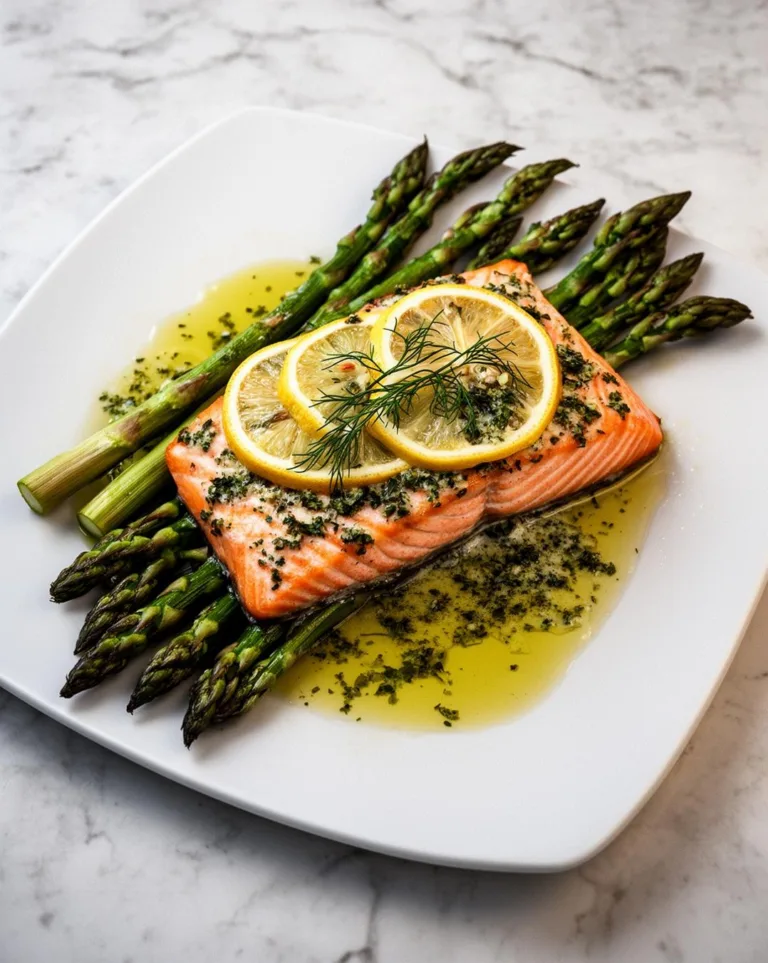
Serve the salmon alongside the bright, tender asparagus, arranging the plate for visual appeal and a balanced macronutrient profile.
A single serving of this keto salmon asparagus dish provides roughly 450 calories, with about 35 g of healthy fats from omega‑3s.
Protein clocks in at 38 g, delivering the muscle‑building power needed after a workout or a demanding day.
Carbohydrates stay under 5 g, making it ideal for strict ketogenic macros while still offering fiber from the asparagus.
The dish also supplies vitamin D, vitamin K, and B‑complex vitamins, supporting immune function and energy metabolism.
To adapt the recipe for meal‑prep, double the ingredients and divide the cooked portions into airtight containers after cooling.
Store each portion with a slice of lemon on top to keep the salmon moist and aromatic over several days.
Reheat gently in a microwave at 50 % power for one minute, then finish under a broiler for two minutes to restore crispness.
Alternatively, enjoy the leftovers cold on a bed of mixed greens for a refreshing keto lunch.
If the salmon sticks to the pan, ensure the sheet is well‑greased and that the fish is completely dry before seasoning.
Overcooked asparagus turns mushy; keep an eye on the timing and pull the sheet out as soon as the spears are tender‑crisp.
A bland flavor often means insufficient garlic‑lemon butter; feel free to double the glaze for a more pronounced taste.
Finally, if you prefer a smoky profile, finish the salmon under a high‑heat broiler for one minute to create a caramelized crust.
Storage
Allow the cooked keto salmon asparagus to cool to room temperature before sealing it in a shallow airtight container.
Refrigerate promptly, where it will stay fresh for up to four days without losing its flaky texture or bright green color.
When reheating, place the salmon and asparagus on a microwave‑safe plate, cover loosely, and warm on medium power for 1‑2 minutes.
If the fish seems dry after reheating, drizzle a tiny spoonful of extra melted butter or olive oil to revive its richness.
For longer storage, the dish freezes well; wrap each portion tightly in plastic wrap, then place in a freezer‑grade zip bag.
Frozen keto salmon asparagus maintains quality for up to three months; label the bag with the date to track freshness.
To thaw, move the container to the refrigerator overnight or use the defrost setting on your microwave for quick results.
After thawing, finish the meal in a preheated 350 °F (175 °C) oven for five minutes to restore the desired crispness.
Variations and Substitutions
Swap the salmon for other oily fish such as mackerel, trout, or sardines to keep the omega‑3 content high while changing the flavor profile.
If you’re avoiding dairy, replace the butter in the glaze with extra‑virgin olive oil or coconut oil for a pure fat source.
Add a handful of cherry tomatoes or thinly sliced red onion for extra color and a subtle sweet contrast to the lemon‑garlic base.
For a spicier kick, stir in a pinch of red‑pepper flakes or a dash of sriracha into the butter mixture before brushing.
Low‑carb enthusiasts can include a side of cauliflower rice seasoned with herbs, creating a complete ketogenic plate without extra carbs.
Vegetarian versions replace the fish with firm tofu or tempeh marinated in the same lemon‑garlic sauce, ensuring a protein‑rich, plant‑based meal.
Experiment with different herbs—such as thyme, rosemary, or basil—to add distinct aromatic notes that complement both salmon and asparagus.
Remember to adjust cooking times if you change the protein; tofu, for example, needs only 8‑10 minutes to achieve a golden crust.
Tips and Tricks
Pat the salmon completely dry before oiling; moisture on the surface prevents a proper sear and can cause the fish to steam instead.
Use a hot, preheated sheet; the initial high heat creates a caramelized exterior while keeping the interior moist and buttery.
For evenly cooked asparagus, cut the spears to uniform thickness—about 1 inch—so they roast at the same rate as the salmon.
Finish with a squeeze of fresh lemon just before serving; the acidity brightens the rich fats and balances the overall palate.
Invest in an instant‑read thermometer; checking the internal temperature ensures the salmon is safely cooked without becoming dry.
If you like a crispier texture, broil the salmon for the last 2 minutes, watching closely to avoid burning.
Store leftovers on a wire rack inside the container; allowing air circulation prevents sogginess, especially for the asparagus.
When meal‑prepping, portion the lemon zest in a separate small container and add it just before reheating for fresh flavor.
Notes
This keto salmon asparagus recipe showcases how simple ingredients can combine into a restaurant‑quality dish without excess carbs.
The lemon‑garlic butter acts as both a glaze and a finishing sauce, delivering a silky mouthfeel that coats each bite.
Because the dish is rich in healthy fats, it can help sustain energy levels for those following a low‑carb or keto diet.
Adjust the seasoning to your preference—more salt for a deeper savory note or extra pepper for a subtle heat.
Timing is crucial; overcooking salmon even by a minute can turn a flaky piece into a dry slab, defeating the purpose of keto.
Similarly, be careful not to overcrowd the baking sheet; crowding traps steam and prevents the asparagus from attaining its signature crisp‑tender bite.
Feel free to experiment with garnish—capers, toasted almonds, or a drizzle of pesto can elevate the flavor profile further.
Finally, enjoy the dish immediately for optimal texture, or follow the storage guidelines for convenient future meals.
Serving Suggestions
Plate each salmon fillet beside a mound of roasted asparagus and drizzle any remaining butter sauce over the top for shine.
Add a wedge of lemon and a sprinkle of fresh herbs to brighten the presentation and complement the keto‑friendly flavors.
Pair the meal with a crisp glass of dry white wine or sparkling water infused with cucumber for a refreshing finish.
This balanced plate meets ketogenic macros while delivering a satisfying and elegant dining experience.
Conclusion
Keto salmon asparagus brings together omega‑3 rich fish, fiber‑packed vegetables, and a citrus‑garlic butter for a fast, nutritious, low‑carb dinner.
By following the step‑by‑step instructions, you’ll achieve perfectly seared salmon and peppery‑crisp asparagus that satisfy both taste buds and dietary goals.
The recipe’s flexibility allows you to adapt proteins, add vegetables, or adjust seasoning, making it a reliable staple for weekly meal planning.
Enjoy this wholesome, keto‑friendly dish any night of the week, confident that it supports health, energy, and culinary enjoyment.
FAQs
Can I use frozen salmon for this recipe?
Yes—thaw the fillets completely, pat them dry, and follow the same seasoning and cooking steps.
How do I know when the salmon is done?
Aim for an internal temperature of 145 °F (63 °C) after resting; a thermometer provides the most accurate result.
Is it okay to cook the salmon and asparagus together on the same pan?
Absolutely; the oven’s heat works for both, just keep the pieces spaced to ensure even browning.
Can I make this recipe dairy‑free?
Swap the butter in the glaze for extra‑virgin olive oil or coconut oil while keeping the garlic‑lemon flavor.
What side dishes complement keto salmon asparagus?
Cauliflower rice, a mixed green salad with avocado, or a simple almond slaw are excellent low‑carb accompaniments.