Balsamic Tomato Parmesan Asparagus Delight
A bright, savory side that comes together in minutes, the balsamic tomato parmesan asparagus medley is perfect for any dinner table.
The combination of sweet‑tart balsamic, juicy tomatoes, and salty parmesan creates an umami‑rich profile that feels indulgent while staying light.
Because the vegetables roast together, you get a caramelized finish without extra fuss, making it an ideal quick weeknight dinner.
Whether you’re feeding a family of four or plating a single‑serve side, this dish balances taste, nutrition, and visual appeal.
Why This Dish Is Good For You
The trio of asparagus, tomatoes, and parmesan packs a potent mix of vitamins and minerals.
Asparagus contributes folate, vitamin K, and antioxidants that support heart health and bone strength.
Ripe tomatoes supply lycopene, vitamin C, and potassium, which help boost the immune system and lower blood pressure.
Parmesan adds calcium and protein, while a splash of balsamic vinegar offers acetic acid that may aid digestion.
People who thrive on a vegetarian diet love this dish for its protein‑rich cheese and nutrient‑dense veg.
Those watching sodium should use reduced‑salt parmesan and limit added salt, as the cheese already contains sodium.
If you have a known allergy to dairy, swap parmesan for a vegan nutritional‑yeast alternative to keep the flavor bright.
Ingredients
– 1 lb (450 g) fresh asparagus spears, trimmed
– 2 cup (300 g) cherry tomatoes, halved
– 3 tbsp (45 ml) extra‑virgin olive oil
– 2 tbsp (30 ml) aged balsamic vinegar
– 1 clove garlic, minced
– ½ cup (50 g) freshly grated Parmesan cheese
– 1 tsp (5 g) sea salt, or to taste
– ½ tsp (2 g) freshly cracked black pepper
Equipment
– Large rimmed baking sheet
– Parchment paper or silicone baking mat
– Small mixing bowl
– Whisk or fork for dressing
– Chef’s knife and cutting board
– Oven mitts
How to Make Balsamic Tomato Parmesan Asparagus
Preheat your oven to 425 °F (220 °C) and line the baking sheet with parchment to prevent sticking.
In the small bowl, whisk together olive oil, balsamic vinegar, minced garlic, sea salt, and black pepper until emulsified.
Spread the trimmed asparagus in a single layer on the sheet, then toss the halved tomatoes over the top.
Drizzle the balsamic mixture evenly across the vegetables, using a spatula to coat each piece thoroughly.
Place the pan in the hot oven and roast for 12 minutes, letting the asparagus begin to soften while the tomatoes burst.
After the initial bake, remove the pan and sprinkle the grated Parmesan evenly over the hot vegetables.
Return the sheet to the oven for another 5‑7 minutes, or until the cheese melts and turns a light golden brown.
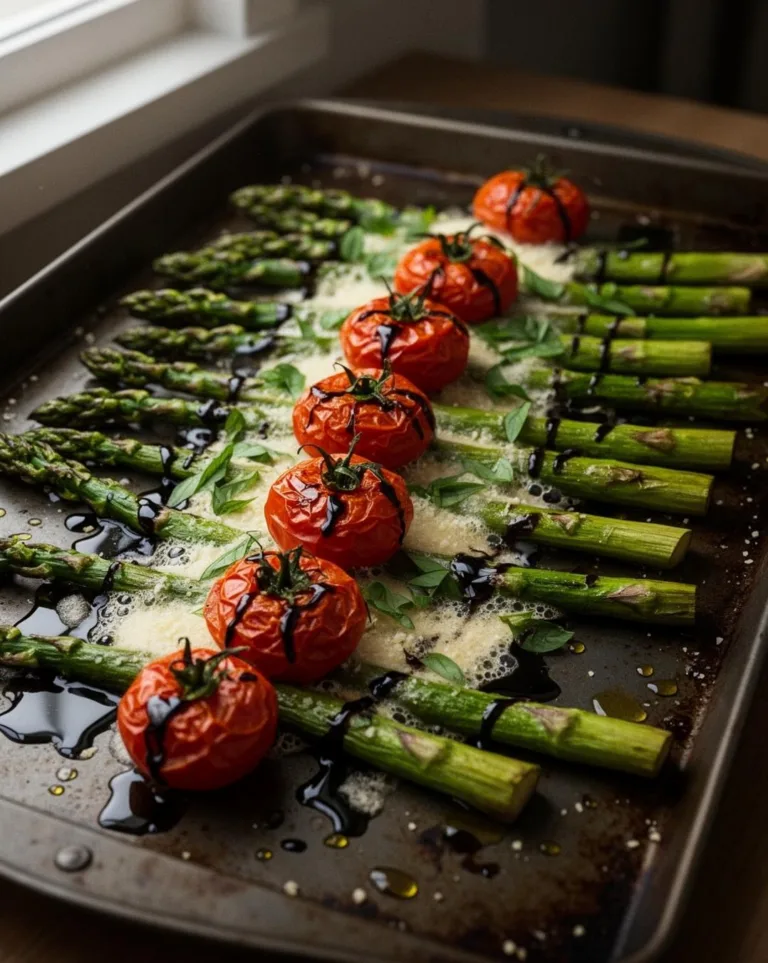
The result should be caramelized edges on the asparagus, glossy tomatoes, and a crispy parmesan crust that adds texture.
While the dish finishes cooking, stir the roasted veggies gently to ensure even cheese distribution.
If you prefer a thicker glaze, drizzle an extra teaspoon of balsamic vinegar just before serving for a glossy finish.
Remove the pan from the oven and let the vegetables rest for two minutes; this allows the flavors to meld.
Transfer the balsamic tomato parmesan asparagus to a serving platter, garnish with a pinch of extra pepper if desired.
Storing Your Leftovers
Allow the roasted vegetables to cool to room temperature within 30 minutes, then transfer them to an airtight container.
Refrigerate promptly; the dish stays fresh for up to four days, retaining its flavor and texture.
If you anticipate a longer hold, portion the vegetables into freezer‑safe bags, removing as much air as possible.
Frozen portions can be reheated directly in a 350 °F (175 °C) oven for 10‑12 minutes, though a slight loss of crispness is normal.
Variations and Substitutions
Swap asparagus for green beans or broccoli for a different crunch, keeping the same cooking time.
Use feta or goat cheese instead of Parmesan for a tangier profile that still complements the balsamic glaze.
Add a pinch of red‑pepper flakes to the dressing for a gentle heat without overwhelming the vegetables.
Tips and Tricks
Pat the asparagus dry before seasoning; excess moisture prevents proper caramelization.
Arrange the vegetables in a single, even layer; crowding creates steam and reduces browning.
For an extra‑crunchy finish, briefly broil the dish for 1‑2 minutes after adding the cheese, watching closely to avoid burning.
If you like a sweeter glaze, whisk a teaspoon of honey into the balsamic mixture before drizzling.
Additional Notes
The dish pairs wonderfully with grilled chicken, fish, or a hearty grain bowl for a complete meal.
Because the balsamic vinegar intensifies as it reduces, be mindful not to over‑salt; taste before adding extra sea salt.
Using a high‑quality aged balsamic provides depth of flavor, but a standard balsamic works fine in a pinch.
For a dairy‑free version, substitute the Parmesan with a tablespoon of nutritional yeast mixed with a dash of smoked paprika.
Serving Suggestions
Plate the balsamic tomato parmesan asparagus alongside a serving of quinoa or a slice of crusty bread for a light lunch.
It also shines as a colorful addition to a Mediterranean mezze spread, nestled among olives and hummus.
Final Thoughts
This balsamic tomato parmesan asparagus recipe delivers a satisfying blend of sweet, savory, and tangy notes in under 30 minutes.
The vibrant colors and crisp‑tender texture make it a crowd‑pleasing side that feels both elegant and home‑cooked.
With straightforward ingredients and minimal cleanup, it fits perfectly into busy schedules while still offering a nutritious boost.
Whether you’re planning a family dinner or a quick weekday meal, this dish proves that simple vegetables can star on any table.
Frequently Asked Questions
Can I make this recipe without an oven?
Yes, a stovetop skillet works; heat the oil and vinegar, add the veggies, cover, and cook until tender, then finish with cheese under a broiler.
How do I prevent the asparagus from becoming mushy?
Trim the spears evenly, avoid over‑crowding on the baking sheet, and roast at a high temperature (425 °F) for a short time.
Is balsamic vinegar safe for diabetics?
Pure balsamic vinegar contains minimal sugar; use it sparingly and pair with low‑glycemic vegetables to keep the dish diabetes‑friendly.
Can I add protein to this side dish?
Absolutely—toss cooked chickpeas or sliced grilled chicken into the pan during the last few minutes of roasting.
What storage container works best for leftovers?
A glass or BPA‑free plastic container with a tight‑locking lid maintains freshness and prevents odor transfer.